 Indietro
Microbiology: Immunity and Host Defense Mechanisms
 05:52
05:52
Termini in questo insieme (24)
Opsonization is the process where pathogens are marked for phagocytosis by coating them with molecules called opsonins.
An opsonin is a molecule that binds to pathogens and enhances their recognition and ingestion by phagocytes.
An antigen is any substance that can trigger an immune response by being recognized as foreign by the immune system.
Cytokines are signaling proteins released by cells that regulate immunity, inflammation, and hematopoiesis.
An epitope is the specific part of an antigen recognized and bound by an antibody or a receptor on immune cells.
Interferons are cytokines that interfere with viral replication and activate immune cells.
Margination is the process where white blood cells adhere to the blood vessel walls near the site of injury or infection.
Diapedesis is the movement of white blood cells through the blood vessel walls into surrounding tissues during inflammation.
A pyrogen is a substance that induces fever by acting on the hypothalamus to raise body temperature.
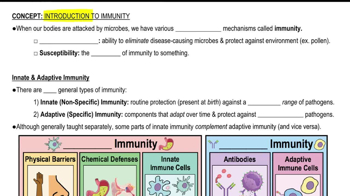
Innate immunity is the immediate, nonspecific defense, while adaptive immunity is slower but specific and has memory.
Mechanical: skin, mucous membranes; Chemical: stomach acid, enzymes; Physical: cilia in respiratory tract.
Plasma is the liquid part of blood with clotting factors; serum is plasma without clotting factors.
Lymph is fluid collected from tissues, filtered through lymph nodes to remove pathogens and debris before returning to blood.
Primary: bone marrow, thymus; Secondary: lymph nodes, spleen, tonsils.
Neutrophils, macrophages, and dendritic cells are the main phagocytic immune cells.
Phagocytosis is the engulfing and digestion of pathogens by phagocytes, a key innate defense mechanism.
Phagocytes recognize pathogens via pattern recognition receptors and opsonin receptors.
Types include interleukins (cell communication), interferons (antiviral), and tumor necrosis factors (inflammation).
The complement system enhances immunity by opsonization, inflammation promotion, and pathogen lysis.
Goals: eliminate cause, clear debris, repair tissue. Stages: vasodilation, phagocyte migration, tissue repair.
Redness, heat, swelling, pain, and loss of function caused by increased blood flow and immune activity.
Benefits: inhibits microbes, enhances immunity; Drawbacks: discomfort, risk if too high.
Body temperature (~37°C) protects mainly against temperature-sensitive microbes like many bacteria and viruses.
Immune response releases cytokines that affect the brain, causing fatigue to conserve energy for healing.