 Indietro
Microbiology: Immunity and Host Defenses
 02:30

Termini in questo insieme (32)
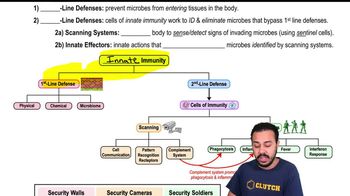
Innate immunity recognizes broad, shared features of pathogens or tissue damage, not specific antigens.
Adaptive immunity recognizes specific antigens through receptors on B and T lymphocytes.
Innate immunity responds immediately or within hours; adaptive immunity is slower on first exposure, taking several days.
Innate immunity traditionally lacks antigen-specific memory; adaptive immunity produces long-lived memory B and T cells.
Barriers, inflammation, fever, phagocytes, natural killer cells, and complement proteins.
B cells, antibodies, and T cells.
The epidermis forms a strong physical barrier with tightly packed cells and keratin; shedding removes microbes.
Mucous membranes line body passages and create a barrier to microbial penetration.
Mucus traps microorganisms and particles before they reach deeper tissues.
Cilia in the respiratory tract move mucus and trapped microbes upward to be coughed out or swallowed.
Tears wash away microbes and contain lysozyme, an antimicrobial enzyme.
Sweat washes microbes, provides inhibitory salts, maintains acidic pH, and contains antimicrobial substances.
Contains fatty acids inhibiting microbes, maintains acidic pH (acid mantle), and prevents skin drying.
Lysozyme breaks bonds in bacterial peptidoglycan, weakening and rupturing especially Gram-positive bacteria.
Protects by occupying sites, consuming nutrients, producing inhibitors, altering pH, and supporting immunity.
Contains antibodies, complement proteins, electrolytes, nutrients, hormones, and dissolved gases.
Bind specific antigens and promote opsonization to enhance phagocyte recognition and ingestion.
Transport oxygen and help transport carbon dioxide.
Defend against infection, abnormal cells, and foreign material.
Promote hemostasis, blood clotting, and vessel repair.
Neutrophils > lymphocytes > monocytes > eosinophils > basophils.
Rapidly migrate to infection, phagocytose bacteria and fungi, dominate early acute inflammation.
B cells produce antibodies; T cells coordinate immunity or kill infected cells; natural killer cells kill infected or abnormal cells.
Circulate in blood, differentiate into macrophages, perform phagocytosis, secrete cytokines, present antigens.
Defend against parasitic worms and participate in allergic inflammation by releasing toxic granules.
Release histamine and inflammatory mediators; contribute to allergic and inflammatory responses.
Chemotaxis, adherence, engulfment, phagolysosome formation, killing/digestion, and residue removal.
Long-lived phagocytes that engulf microbes, release cytokines, and present antigens to T cells.
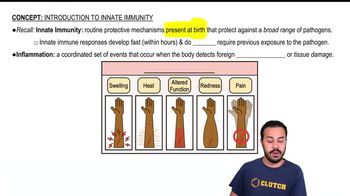
Redness, heat, swelling, and pain.
Vasodilation and increased capillary permeability allow immune cells and fluid into tissues.
Pyrogens stimulate prostaglandin production in hypothalamus, raising the temperature set point.
Slows pathogen reproduction, enhances immune reactions, increases leukocyte activity, reduces nutrients for microbes.