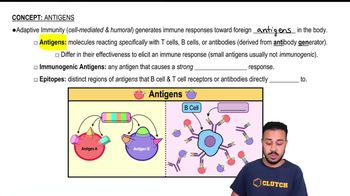
An antigen is any molecule or molecular structure that can be recognized by the immune system and elicit an immune response.
Define epitope.
An epitope is the specific part of an antigen recognized and bound by an antibody or a receptor on a lymphocyte.
What is an immunogen?
An immunogen is an antigen that is capable of inducing a specific immune response.
What is HLA?
HLA (Human Leukocyte Antigen) refers to the human major histocompatibility complex proteins involved in antigen presentation.
Define MHC.
MHC (Major Histocompatibility Complex) molecules present antigen fragments to T cells to initiate immune responses.
What is immune specificity?
Immune specificity is the ability of the immune system to recognize and respond to a particular antigen.
What is immune memory?
Immune memory is the capacity of the immune system to respond more rapidly and effectively to pathogens it has encountered before.
Define immune tolerance.
Immune tolerance is the immune system's ability to avoid attacking the body’s own cells and harmless substances.
Compare MHCI and MHCII expression patterns.
MHCI is expressed on almost all nucleated cells; MHCII is mainly on antigen-presenting cells like dendritic cells, macrophages, and B cells.
Describe antigen processing for intracellular antigens.
Intracellular antigens are degraded by the proteasome, peptides transported into the ER, loaded onto MHCI molecules, and presented on the cell surface.
What happens during the primary immune response?
The primary response involves initial antigen recognition, activation of naive lymphocytes, and production of effector cells and antibodies.
Describe the secondary immune response.
The secondary response is faster and stronger due to activation of memory lymphocytes generated during the primary response.
How are T cytotoxic cells activated?
T cytotoxic cells are activated when their T cell receptor recognizes antigen presented on MHCI along with co-stimulatory signals.
What is the role of T cytotoxic cells after activation?
Activated T cytotoxic cells differentiate and kill infected or abnormal cells presenting the specific antigen.
Differentiate effector lymphocytes from memory lymphocytes.
Effector lymphocytes actively eliminate pathogens; memory lymphocytes persist long-term to provide rapid response upon re-exposure.
 Indietro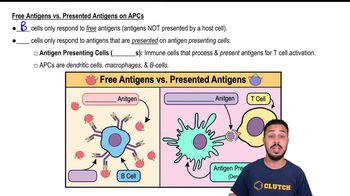
 04:11
04:11