 Indietro
Microbiology Introductory Concepts and Cell Biology Chapters 1-5
 03:36
03:36

Termini in questo insieme (28)
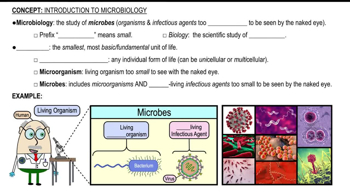
Living groups: bacteria, archaea, fungi, protozoa, algae. Nonliving/noncellular entities: viruses, prions.
The theory that certain organelles in eukaryotic cells, like mitochondria and chloroplasts, originated from free-living prokaryotes engulfed by ancestral cells.
A pathogen causes disease in healthy hosts; an opportunistic pathogen causes disease only when the host's defenses are compromised.
Spontaneous generation claimed life arises from nonliving matter; biogenesis states life arises from existing life. Biogenesis was proven correct by Redi and Pasteur.
The theory that microorganisms are the etiological agents causing infectious diseases.
Robert Koch established criteria known as Koch's postulates.
Aseptic technique prevents contamination by microbes; it is central to healthcare to reduce infections.
An infection acquired in a healthcare setting, often caused by opportunistic pathogens.
Bacteria, Archaea, and Eukarya.
A system of naming organisms using genus and species; developed by Carolus Linnaeus.
Parasitism: one benefits, other harmed.
Mutualism: both benefit.
Commensalism: one benefits, other unaffected.
A community of microbes attached to a surface in a protective matrix; example: dental plaque.
A nutrient-rich substance used to grow microorganisms in the lab.
It differentiates bacteria by their cell wall structure: Gram-positive have thick peptidoglycan; Gram-negative have thin peptidoglycan and outer membrane.
Gram-positive: purple; Gram-negative: pink/red.
It detects bacteria with a waxy cell wall containing mycolic acid, such as Mycobacterium.
Capsules protect bacteria from phagocytosis and help them adhere to surfaces, increasing pathogenicity.
Highly resistant dormant structures formed by some bacteria to survive harsh conditions.
DNA is the main molecule contained in the nucleoid region.
Ribosomes synthesize proteins by translating mRNA.
Prokaryotic ribosomes are 70S; eukaryotic ribosomes are 80S. Mitochondria and chloroplasts have 70S ribosomes.
It controls the movement of substances in and out of the cell and maintains homeostasis.
Movement of an organism toward or away from a chemical stimulus.
Active transport requires energy to move substances against a gradient; passive transport does not require energy and moves substances down a gradient.
Passive diffusion of water across a selectively permeable membrane.
Flagella provide motility to bacterial cells.
Mitosis produces two identical diploid cells; meiosis produces four genetically diverse haploid cells.
Mitochondria generate ATP through cellular respiration; more mitochondria correlate with higher cell activity.