 Indietro
Microbiology - Key Concepts and History
 03:36
03:36

Termini in questo insieme (20)
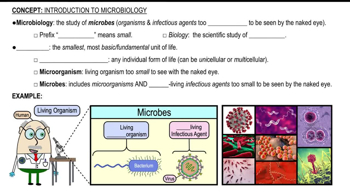
Microbiology is the study of microorganisms, which are organisms too small to be seen clearly with the naked eye, generally less than 1 mm in size.
Francis Crick proposed the Central Dogma in 1958, stating that genetic information flows in one direction: DNA → RNA → protein.
Genome: all genetic information of an individual.
Genotype: unique set of genes.
Phenotype: observable traits.
Mutation: changes in DNA sequence affecting gene message.
Microorganisms are tiny organisms, usually <1 mm. Examples include bread mold (Rhizopus) about 2.5 mm long and Thiomargarita magnifica up to 10-20 mm.
The three domains are Bacteria, Archaea, and Eukarya, classified based on ribosomal RNA gene comparisons.
Prokaryotes have no membrane-bound nucleus and are smaller (~1-5 µm), while eukaryotes have a nucleus and organelles, and are larger (~10-100 µm).
Ribosomes are the site of protein synthesis in both prokaryotic and eukaryotic cells, consisting of two subunits.
16S rRNA gene sequences are used to identify and classify bacteria; identical sequences indicate the same species.
Archaea have unique 16S rRNA sequences, distinct membrane lipids, unusual metabolism (e.g., methane production), and often live in extreme environments.
Protists are mostly unicellular eukaryotes like protozoa and algae; fungi can be unicellular (yeasts) or multicellular (molds, mushrooms).
Acellular agents include viruses, viroids, satellites, and prions, which lack cellular structure and require hosts to replicate.
It proposes that early life used RNA for genetic information and catalysis before DNA and proteins evolved.
RNA's role in ribosomes, catalytic activity (ribozymes), ATP as energy source, and gene regulation support RNA as the original molecule of life.
It explains the origin of mitochondria and chloroplasts as bacteria that entered early eukaryotic cells and became organelles.
Criteria to establish a causative link between a microorganism and a disease, including isolation and reproduction of disease in a healthy host.
Some microbes can't be cultured, lack suitable animal models, or ethical issues prevent testing in humans.
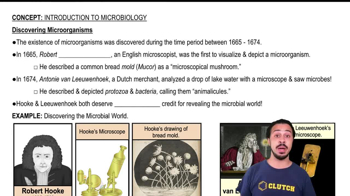
He was the first person to observe microorganisms accurately using microscopes in the 1600s.
He disproved spontaneous generation with swan-neck flask experiments and developed pasteurization to prevent microbial spoilage.
He introduced antiseptic surgery using phenol to reduce infections, providing evidence that microbes cause disease.
The science of classifying microorganisms, including classification, nomenclature (binomial names), and identification of strains.