 Indietro
Microbiology Metabolism and Microbial Nutrition
 02:17
02:17
Termini in questo insieme (29)
CO₂ is the primary carbon source for autotrophs.
The Pentose Phosphate Pathway (PPP) should be enhanced to maximize NADPH production.
They provide carbon skeletons for biosynthesis of macromolecules.
To regenerate NAD⁺ for glycolysis continuation.
By oxidizing inorganic compounds such as H₂S or reduced iron.
In the plasma membrane.
Because alternative electron acceptors have lower electron affinity than oxygen.
It produces useful end products such as lactic acid and ethanol.
Fermentation is the most likely ATP-generating strategy.
Chemoheterotrophs include most medically important bacteria.
The Pentose Phosphate Pathway (PPP) is considered anabolic.
Aerobic respiration maximizes ATP production from glucose.
Anabolism is most likely impaired.
They use abundant organic molecules from their hosts as both carbon and energy sources.
Anaerobic respiration is occurring under nitrate conditions.
ATP synthesis is directly powered by PMF.
The Pentose Phosphate Pathway (PPP) is most likely defective.
Inorganic compounds serve as electron sources for lithotrophs.
Organic compounds are the carbon source for heterotrophs.
Oxidative phosphorylation depends directly on PMF.
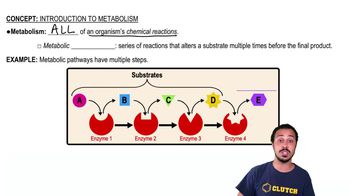
The total of all chemical reactions in a cell.
ATP is the primary energy currency.
Net yield is 2 ATP and 2 NADH per glucose.
The Pentose Phosphate Pathway (PPP) produces Ribose-5-Phosphate.
Oxygen is the terminal electron acceptor.
Substrate-level phosphorylation transfers phosphate directly to ADP.
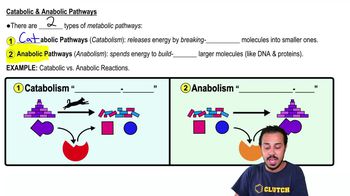
Because it breaks down glucose and releases energy.
The TCA cycle produces NADH and FADH₂.
It represents an electrochemical gradient usable for cellular work.