 Indietro
Microbiology: Respiratory Viruses and Immunization
 05:21

Termini in questo insieme (23)
Include RSV antibody for newborns RSV, vaccination for pregnant people to protect infants, and RSV vaccine of elderly to reduce severe RSV disease.
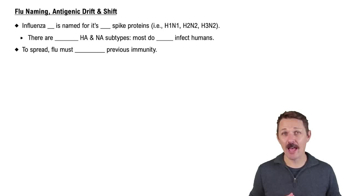
Based on hemagglutinin (H) and neuraminidase (N) surface proteins, e.g., H1N1, indicating specific variants of these proteins.
All caused by coronaviruses; SARS and MERS had higher fatality but limited spread; COVID-19 is highly transmissible with global pandemic impact.
Nirsevimab blocks RSV entry by targeting the fusion (F) protein, preventing viral fusion with host cells.
Ribavirin inhibits viral RNA synthesis by acting as a nucleoside analog, interfering with viral replication.
Oseltamivir inhibits neuraminidase, preventing release of new influenza virions from infected cells.
Baloxavir marboxil inhibits influenza virus cap-dependent endonuclease, blocking viral mRNA synthesis.
Remdesivir inhibits viral RNA-dependent RNA polymerase, blocking RNA synthesis in viruses like SARS-CoV-2.
Clesrovimab is a monoclonal antibody that neutralizes SARS-CoV-2 by binding the spike protein, preventing cell entry.
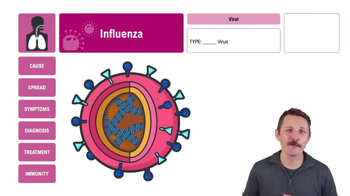
Influenza virus is an RNA virus with segmented genome, causing respiratory infection.
Primarily via respiratory droplets, aerosols, and fomites from infected individuals.
Includes PCR, antigen tests, viral culture, and serology depending on the virus.
Antiviral drugs like oseltamivir, supportive care, and monoclonal antibodies depending on the virus.
Include live attenuated, inactivated, subunit, and mRNA vaccines depending on the virus.
Upper: nose, nasal cavity, pharynx. Lower: larynx, trachea, bronchi, lungs.
Include mucociliary clearance, mucus, immune defenses, and normal microbiota.
Terms like rhinitis (nasal inflammation), bronchitis (bronchial inflammation), and pneumonia (lung infection).
Exists mainly in the upper respiratory tract; common phyla include Firmicutes, Bacteroidetes, and Proteobacteria.
Colds: mild nasal congestion, sneezing; Influenza: sudden fever, body aches, fatigue, more severe systemic symptoms.
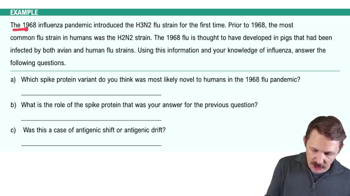
Drift: small mutations causing seasonal changes; shift: major gene reassortment causing pandemics like 1918 Spanish flu.
RNA virus transmitted via droplets and aerosols; uses spike protein to enter host cells via ACE2 receptor; causes COVID-19 disease.
Variant: virus with genetic mutations; strain: variant with distinct properties like transmissibility or virulence.
Variants of Interest (VOI), Variants of Concern (VOC), and Variants of High Consequence (VOHC) based on impact.