 Indietro
Microbiology Study Guide Basics
 01:35
01:35
Termini in questo insieme (15)
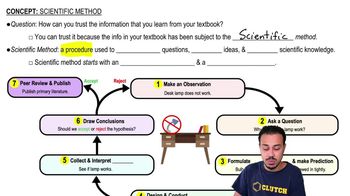
Observation, hypothesis, experimentation, data analysis, and conclusion.
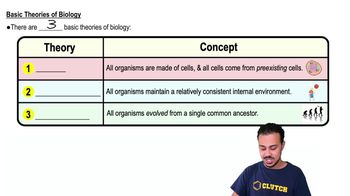
Scientific laws describe observed phenomena, while theories explain why those phenomena occur.
Transitions between phases include melting, freezing, vaporization, condensation, sublimation, and deposition.
Move the decimal point left or right according to the exponent to convert between scientific and standard notation.
Exact numbers have no uncertainty; measured numbers include some uncertainty.
Significant figures are digits in a measurement that are known reliably plus one estimated digit.
Count all nonzero digits, zeros between nonzeros, and trailing zeros if after a decimal point.
Leading zeros are not significant; captive zeros are significant; trailing zeros are significant if after a decimal.
Result should have the same decimal places as the number with the fewest decimal places.
Result should have the same number of significant figures as the number with the fewest significant figures.
SI units are the standard units of measurement in science, based on the metric system.
Prefixes like kilo-, centi-, and milli- indicate multiples or fractions of base units.
Base units include meter, kilogram, second; derived units include volume and density.
Conversion factors are ratios used to convert between different units.
Use significant figures from the original measurement, not the conversion factor, unless the factor is exact.