 Indietro
Microbiology Unit 1 Exam Study Guide
 04:27
04:27
Termini in questo insieme (28)
Microorganisms play roles in decomposition, nutrient cycling, disease, biotechnology, and food production.
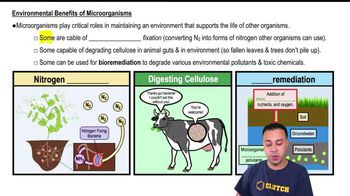
They aid in digestion, produce vitamins, bioremediate pollutants, and are used in antibiotic and vaccine production.
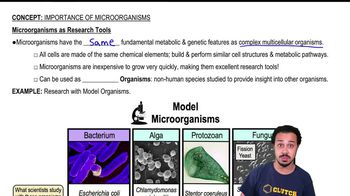
Genus name is capitalized and species name is lowercase, both italicized, e.g., Escherichia coli.
First to describe and name cells using a microscope in cork tissue.
Observed and described living microorganisms using handcrafted microscopes.
Redi showed maggots come from flies; Needham's broth experiment was flawed; Spallanzani sealed broth to prevent growth; Pasteur used swan-neck flask to prove biogenesis.
To establish a causal relationship between a microbe and a disease.
1. Microbe present in diseased but not healthy; 2. Isolate and grow microbe; 3. Cause disease in healthy host; 4. Re-isolate same microbe.
Developed the first vaccine using cowpox to prevent smallpox.
Developed the concept of a magic bullet and created the first effective chemotherapy drug.
Discovered penicillin, the first natural antibiotic.
Introduced antiseptic surgical techniques to reduce infections.
It leads to treatment failures, increased healthcare costs, and the spread of multi-drug resistant pathogens.
Overuse and misuse of antibiotics, genetic mutations, and horizontal gene transfer among bacteria.
Archaea have unique membrane lipids and often live in extreme environments; Bacteria have peptidoglycan cell walls and diverse habitats.
A micrometer (µm) is 1000 times smaller than a millimeter (mm).
A nanometer (nm) is 1000 times smaller than a micrometer (µm).
10 nm = \(0.01\) µm.
10 µm = \(10000\) nm.
Light passes from the light source through the condenser, then the specimen, through the objective lens, and finally the ocular lens to the eye.
It is the measure of light bending; immersion oil is used to reduce refraction and increase resolution at high magnification.
Resolution is the ability to distinguish two points as separate; improved by shorter wavelength and better lenses.
It differentiates bacteria into Gram-positive and Gram-negative, guiding diagnosis and treatment.
Gram-positive have thick peptidoglycan; Gram-negative have thin peptidoglycan and outer membrane with lipopolysaccharides.
Axial filament: motility; Glycocalyx: protection and adhesion; Fimbriae: attachment; Pilus: DNA transfer.
Simple diffusion, passive transport, facilitated diffusion, active transport, and group translocation.
Hypotonic causes swelling; hypertonic causes shrinkage; osmotic lysis is bursting; plasmolysis is shrinking away from cell wall.
Mitochondria and chloroplasts have their own DNA and ribosomes similar to prokaryotes, supporting their origin from bacteria.