 Indietro
Principles of Disease and Epidemiology - Microbiology
 01:36

Termini in questo insieme (25)
Pathology is the study of disease.
Etiology is the study of the cause of a disease.
Pathogenesis is the development of a disease.
Infection is the colonization of the body by pathogens.
Disease is an abnormal state in which the body is not functioning normally.
Transient microbiota are present temporarily, while normal microbiota permanently colonize the host and usually do not cause disease.
- Commensalism: one benefits, other unaffected.
- Mutualism: both benefit.
- Parasitism: one benefits at the expense of the other.
Opportunistic pathogens are normal microbiota that cause disease when in a different environment or host condition.
Microbial antagonism is competition between microbes, where normal microbiota protect the host by occupying niches, producing acids, and bacteriocins.
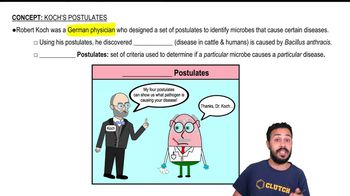
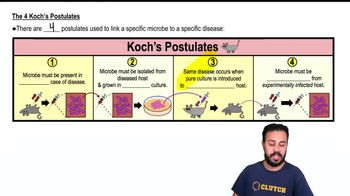
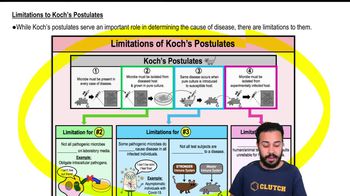
Koch's postulates are used to prove the cause of an infectious disease.
- Pathogen present in every disease case.
- Isolate pathogen in pure culture.
- Inoculate healthy host to reproduce disease.
- Re-isolate the same pathogen from inoculated host.
Symptom: subjective change felt by patient.
Sign: objective, measurable change observed by others.
A communicable disease spreads from one host to another, directly or indirectly.
Noncommunicable disease is not transmitted between hosts. Example: tetanus.
Incidence is the fraction contracting disease during a time.
Prevalence is the fraction having disease at a given time.
- Endemic: constantly present (e.g., common cold).
- Epidemic: many cases in short time (e.g., influenza).
- Pandemic: worldwide epidemic (e.g., AIDS).
- Acute: rapid onset, short duration.
- Chronic: slow development, long duration.
- Latent: inactive period with no symptoms.
- Local: limited to small area.
- Systemic: throughout body.
- Focal: systemic infection starting from local site.
Factors increasing susceptibility include gender, genetics, climate, nutrition, fatigue, age, lifestyle, and chemotherapy.
Reservoirs are continual sources of infection: humans, animals, or nonliving (soil, water).
- Contact: direct, indirect (fomites), droplet.
- Vehicle: via inanimate reservoirs like food or water.
- Vectors: arthropods mechanically or biologically transmitting pathogens.
Nosocomial infections are hospital-acquired infections affecting 5-15% of patients.
- Genetic recombination
- Evolution of new strains
- Antibiotic misuse
- Weather changes
- Modern transportation
- Ecological disasters
- Public health failures
Epidemiology is the study of where and when diseases occur.
Morbidity rate: number affected relative to population.
Mortality rate: number of deaths relative to population.