 Indietro
Study guide test 2
 01:37
01:37
Termini in questo insieme (27)
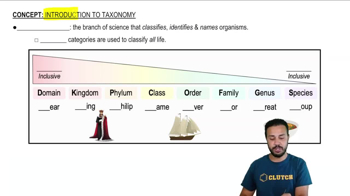
Taxonomy is the science of classifying organisms into categories (taxa) to show their similarities.
Phylogeny is the study of the evolutionary history of organisms.
The two-kingdom system (Plantae and Animalia) did not adequately classify microorganisms like bacteria and fungi.
Whittaker proposed the five-kingdom system in 1969.
The three domains are Bacteria, Archaea, and Eukarya.
It is based on nucleotide sequences in ribosomal RNA (rRNA).
Prokaryotic, lack peptidoglycan, have unique membrane lipids, often extremophiles like methanogens and hyperthermophiles.
Eukaryotes originated from prokaryotic cells living inside one another as endosymbionts, leading to organelles like mitochondria and chloroplasts.
To avoid confusion from different languages and geographic names, using a universal binomial nomenclature system.
Organisms are named with two parts: Genus and species (specific epithet), e.g., Homo sapiens.
Culture: bacteria grown in lab media.
Clone: population from a single parent cell.
Strain: genetically different cells within a clone.
Fungi, Plantae, Animalia, and Protists.
Viruses are not part of any domain; classified by morphology, genome, enzymes, and ecological niche.
It provides the classification scheme and identification methods for prokaryotes.
Morphology, cell wall composition, differential staining, oxygen requirements, biochemical tests.
They detect enzymatic activities to differentiate bacteria and infer ecological niches.
The study of serum and immune responses; uses antibodies to identify microorganisms.
Bacteria clump (agglutinate) when mixed with specific antibodies, indicating presence of the bacteria.
Detects antigens or antibodies using enzyme-linked antibodies and color change reactions.
Determines which bacteriophages infect a bacterial strain to trace infection sources.
Uses laser and fluorescence to separate cells by size and markers without culturing.
Measures DNA strand binding between organisms; >70% hybridization indicates same species.
Amplifies small DNA quantities for detection and identification of microbes.
Uses DNA probes to detect specific DNA sequences in samples.
Contains DNA probes to detect pathogens by hybridization and fluorescence.
Identification of microorganisms by sequencing ribosomal RNA genes.
A tool for identifying organisms by answering a series of yes/no questions.