 Indietro
study guide test 2
 07:36
07:36
Termini in questo insieme (23)
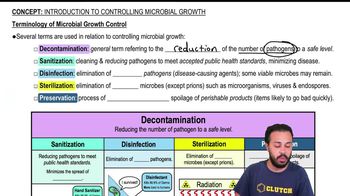
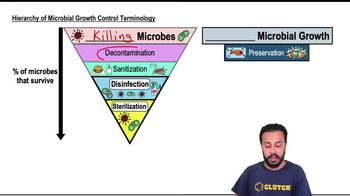
Sterilization is the process that destroys or removes all forms of microbial life, including spores.
Disinfection is the process of eliminating most or all pathogenic microorganisms, except bacterial spores, on inanimate objects.
Antisepsis is the process of reducing or inhibiting microbial growth on living tissue.
Degerming is the mechanical removal of microbes from a limited area, such as skin around an injection site.
Sanitization is the process of lowering microbial counts on eating utensils to safe public health levels.
Biocide or germicide refers to any chemical agent that kills microorganisms.
Bacteriostasis is the inhibition of bacterial growth without killing the bacteria.
Asepsis is the absence of significant contamination by pathogens.
They injure lipids of plasma membranes, causing leakage and remain active in the presence of organic matter.
Bisphenols contain two phenol groups connected by a bridge and disrupt plasma membranes.
Hexachlorophene is used to control skin infections; Triclosan was used in antimicrobial soaps and toothpastes but mostly discontinued.
Biguanides disrupt plasma membranes and are effective against gram-positive bacteria, many gram-negative bacteria, and enveloped viruses.
Chlorhexidine is used in surgical hand scrubs; Alexidine works faster than chlorhexidine.
Essential oils are plant-extracted hydrocarbons; their antimicrobial action is mainly due to phenolics and terpenes, stronger against gram-positive bacteria.
Iodine impairs protein synthesis and alters membranes; chlorine acts as an oxidizing agent shutting down cellular enzymes.
Tincture is iodine in aqueous alcohol; iodophor is iodine combined with organic molecules like povidone iodine used for skin antisepsis.
Alcohols denature proteins and dissolve lipids but have no effect on endospores and nonenveloped viruses; require water to be effective.
Very small amounts of heavy metals like silver, mercury, copper, and zinc exert antimicrobial activity by denaturing proteins.
Quats are cationic surface-active agents that denature proteins and disrupt plasma membranes; broad spectrum but ineffective against endospores and mycobacteria.
Aldehydes inactivate proteins by cross-linking functional groups; glutaraldehyde is a liquid chemical sterilizer used on medical equipment.
Gaseous sterilants like ethylene oxide cause alkylation, cross-linking nucleic acids and proteins; used for heat-sensitive materials.
Gram-negative bacteria are more resistant due to lipopolysaccharide; mycobacteria and endospores show high resistance; nonenveloped viruses are more resistant than enveloped viruses.
Prions resist standard disinfection; require immersion in NaOH and autoclaving at 121°C for 1 hour.