Ch. 26 - Applied and Industrial Microbiology
Bauman - Microbiology with Diseases by Taxonomy 6th Edition
Bauman6th EditionMicrobiology with Diseases by TaxonomyISBN: 9780134832302Non è quello che usi tu?Cambia libro di testo
Capitolo 26, Problema 8

During chemical treatment of drinking water and wastewater, which of the following microbes is least likely to be inactivated or killed?
a. Algae
b. Viruses
c. Fungal spores
d. Bacteria

Guida verificata passo dopo passo
1
Understand the context: Chemical treatment of drinking water and wastewater aims to inactivate or kill harmful microorganisms to make the water safe for use.
Recall the general resistance of different microbes to chemical disinfectants: Viruses, bacteria, algae, and fungal spores vary in their susceptibility to chemical agents.
Consider that fungal spores are known for their tough, resistant structures that protect them from harsh environmental conditions, including chemical disinfectants.
Compare the resistance levels: Algae and bacteria are generally more susceptible to chemical treatments, while viruses can be quite resistant but usually less so than fungal spores.
Conclude that among the options, fungal spores are least likely to be inactivated or killed during chemical treatment due to their resistant nature.

Risposta video verificata per un problema simile:

Questa soluzione video è stata consigliata dai nostri tutor come utile per risolvere questo problema.
Durata del video:
1m

Concetti chiave

Ecco i concetti essenziali che devi comprendere per rispondere correttamente alla domanda.

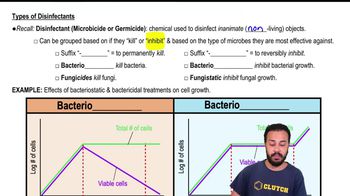
Microbial Resistance to Chemical Disinfectants

Different microbes exhibit varying levels of resistance to chemical disinfectants used in water treatment. Factors such as cell structure, protective coatings, and metabolic state influence their susceptibility. Understanding which microbes are more resistant helps in selecting effective treatment methods.
Video consigliato:
05:21
Types of Disinfectants

Characteristics of Fungal Spores

Fungal spores are reproductive units with thick walls that protect them from harsh environmental conditions, including chemical disinfectants. Their resilience makes them harder to inactivate compared to many bacteria and viruses, often requiring stronger or prolonged treatment.
Video consigliato:
05:09
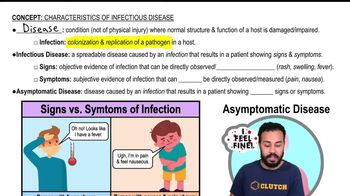
Intro to Characteristics of Infectious Disease

Differences Between Microbial Groups (Algae, Viruses, Bacteria)

Algae are photosynthetic eukaryotes with cell walls, viruses are acellular particles requiring host cells, and bacteria are single-celled prokaryotes. These structural and biological differences affect their vulnerability to chemical treatments, with viruses often being more susceptible than spores or some algae.
Video consigliato:
05:58
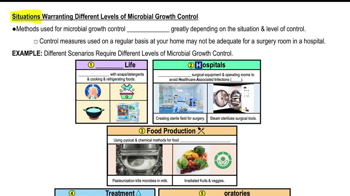
Situations Warranting Different Levels of Microbial Growth Control