

Ch. 22 - Microbial Diseases of the Nervous System
Tortora - Microbiology: An Introduction 14th Edition
Tortora14th EditionMicrobiology: An IntroductionISBN: 9780138200398Non è quello che usi tu?Cambia libro di testo
Capitolo 18, Problema 4

Provide the following information on poliomyelitis: etiology, method of transmission, symptoms, prevention. Why aren’t the Salk and Sabin vaccines considered treatments for poliomyelitis?

Guida verificata passo dopo passo
1
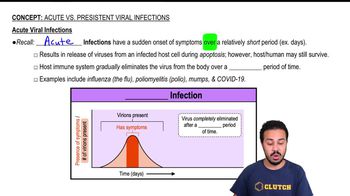
Identify the etiology of poliomyelitis by explaining that it is caused by the poliovirus, which is an enterovirus belonging to the Picornaviridae family.
Describe the method of transmission, emphasizing that poliovirus spreads primarily via the fecal-oral route, often through contaminated water or food, and occasionally through respiratory droplets.
List the symptoms of poliomyelitis, including initial flu-like symptoms such as fever, fatigue, headache, vomiting, stiffness in the neck, and muscle pain, and explain that in severe cases, the virus can invade the central nervous system causing paralysis.
Explain prevention strategies, focusing on the use of vaccines (Salk and Sabin), good sanitation, and hygiene practices to reduce transmission.
Clarify why the Salk (inactivated poliovirus vaccine) and Sabin (oral live attenuated vaccine) vaccines are not considered treatments: they are preventive measures designed to induce immunity before infection, and do not cure or treat active poliovirus infection.

Risposta video verificata per un problema simile:

Questa soluzione video è stata consigliata dai nostri tutor come utile per risolvere questo problema.
Durata del video:
2m

Concetti chiave

Ecco i concetti essenziali che devi comprendere per rispondere correttamente alla domanda.

Etiology of Poliomyelitis

Poliomyelitis is caused by the poliovirus, an enterovirus belonging to the Picornaviridae family. It primarily infects the human nervous system, especially motor neurons in the spinal cord, leading to muscle weakness and paralysis. Understanding the viral origin is essential to grasp disease mechanisms.
Video consigliato:
03:29
Acute Viral Infections

Transmission and Symptoms of Poliomyelitis

Poliovirus spreads mainly through the fecal-oral route, often via contaminated water or food. Initial symptoms include fever, fatigue, headache, and muscle pain, which can progress to paralysis in severe cases. Recognizing transmission and clinical signs aids in disease control and diagnosis.
Video consigliato:
04:23
Transmission Electron Microscope (TEM)

Vaccines vs. Treatments for Poliomyelitis

The Salk (inactivated) and Sabin (oral live attenuated) vaccines prevent poliovirus infection by inducing immunity but do not cure existing infections. Vaccines are prophylactic, designed to stop disease onset, whereas treatments would target and eliminate the virus after infection has occurred.
Video consigliato:
07:22
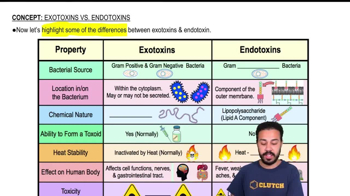
Exotoxins vs. Endotoxin Review
Pratica correlata
Domanda del libro di testo

After receiving a corneal transplant, a patient developed dementia and loss of motor function, then became comatose and died. Cultures were negative. Serological tests were negative. Autopsy revealed spongiform degeneration of brain tissue. The patient most likely had

a. Rabies.

b. Creutzfeldt-Jakob disease.

c. Botulism.

d. Tetanus.

e. Leprosy.

1234
views
Domanda del libro di testo

Why is the following description used for wounds that are susceptible to C. tetani infection: “. . . Improperly cleaned deep puncture wounds . . . ones with little or no bleeding . . .”?

1217
views
Domanda del libro di testo

Endotoxin is responsible for symptoms caused by which of the following organisms?

a. N. meningitidis

b. S. pyogenes

c. L. monocytogenes

d. C. tetani

e. C. botulinum

1365
views
Domanda del libro di testo

The increased incidence of encephalitis in the summer months is due to

a. Maturation of the viruses.

b. Increased temperature.

c. The presence of adult mosquitoes.

d. An increased population of birds.

e. An increased population of horses.

Domanda del libro di testo

Which of the following does not have an animal reservoir or vector?

a. Listeriosis

b. Cryptococcosis

c. Amebic meningoencephalitis

d. Rabies

e. African trypanosomiasis

1239
views
Domanda del libro di testo

A 12-year-old child hospitalized for Guillain-Barré syndrome had a 4-day history of headache, dizziness, fever, sore throat, and weakness of legs. Seizures began 2 weeks later. Bacterial cultures were negative. The child died 3 weeks after hospitalization. An autopsy revealed inclusions in brain cells that tested positive in an immunofluorescence test. This patient probably had

a. Rabies.

b. Creutzfeldt-Jakob disease.

c. Botulism.

d. Tetanus.

e. Leprosy.

1456
views