Skip to main content
Nutrition
Il mio corso
Impara
Preparazione agli esami
AI Tutor
Guide di studio
Flashcard
Prova l'app
Il mio corso
Impara
Preparazione agli esami
AI Tutor
Guide di studio
Flashcard
Prova l'app
Indietro
Nutrition Exam 3 Review Flashcards
Puoi toccare per girare la carta.
Intracellular vs extracellular electrolytes
Puoi toccare per girare la carta.
👆
Intracellular vs extracellular electrolytes
Intracellular electrolytes
include potassium and phosphate;
extracellular electrolytes
include sodium, chloride, and calcium.
Avanzamenti del tracciato
I pulsanti di controllo sono stati cambiati in modalità "navigazione".
1/27
Video consigliati
05:33
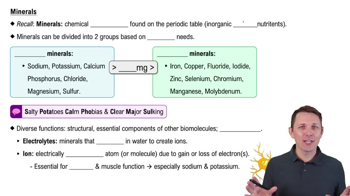
Minerals
307
views
3
rank
02:03
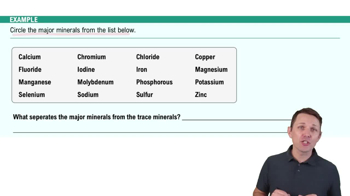
Introduction to Minerals Example 1
239
views
1
rank
Termini in questo insieme (27)
Nascondere definizioni
Intracellular vs extracellular electrolytes
Intracellular electrolytes
include potassium and phosphate;
extracellular electrolytes
include sodium, chloride, and calcium.
Major functions of electrolytes
Electrolytes regulate
fluid balance
,
nerve transmission
, and
muscle contraction
.
Rich food sources of Calcium
Dairy products, leafy green vegetables, and fortified foods are rich in
calcium
.
Rich food sources of Magnesium
Nuts, whole grains, green leafy vegetables, and legumes are high in
magnesium
.
Rich food sources of Chloride
Table salt (sodium chloride) and processed foods are major sources of
chloride
.
Rich food sources of Phosphorus
Meat, dairy, nuts, and legumes provide abundant
phosphorus
.
Rich food sources of Potassium
Bananas, potatoes, oranges, and spinach are rich in
potassium
.
Rich food sources of beta-carotene
Carrots, sweet potatoes, and dark leafy greens are high in
beta-carotene
.
Rich food sources of Vitamin E
Nuts, seeds, vegetable oils, and green leafy vegetables are good sources of
vitamin E
.
Relationship between Vitamin D and Calcium
Vitamin D
enhances
calcium absorption
in the intestines, aiding bone health.
Functions of Vitamin C
Vitamin C
supports collagen synthesis, antioxidant defense, and immune function.
Who is at risk for Vitamin C deficiency?
Smokers, elderly, and people with limited fruit and vegetable intake are at risk for
vitamin C deficiency
.
Osteoblasts vs Osteoclasts
Osteoblasts
build bone;
osteoclasts
break down bone tissue.
Definition and function of leukocytes
Leukocytes
are white blood cells that defend the body against infection.
Factors affecting body water percentage
Age, gender, body composition, and hydration status affect the
percentage of water
in the body.
Neural tube defect
A birth defect caused by incomplete closure of the neural tube, often linked to
folate deficiency
.
Free radicals: formation and damage
Free radicals form from normal metabolism and environmental exposures; they damage
DNA, lipids, and proteins
.
Antioxidants and their role
Antioxidants
neutralize free radicals, protecting cells from oxidative damage.
Pro-vitamin definition
A
pro-vitamin
is a compound that the body can convert into an active vitamin, like beta-carotene to vitamin A.
Dehydration vs heat stroke vs heat cramps vs heat exhaustion
Dehydration
: fluid loss;
heat cramps
: muscle spasms;
heat exhaustion
: heavy sweating, weakness;
heat stroke
: life-threatening high body temp.
Hypercalcemia associated problems
Excess calcium can cause kidney stones, muscle weakness, and impaired kidney function.
Function of water in the body and sweating
Water regulates temperature, transports nutrients, and sweating cools the body through evaporation.
Heme vs non-heme iron sources
Heme iron
(from animal products) is better absorbed than
non-heme iron
(from plant sources).
Thirst mechanism
The hypothalamus triggers thirst when blood osmolarity rises or blood volume decreases.
Maintaining normal blood pressure through diet
Limit sodium, eat potassium-rich foods, and maintain a balanced diet to support
normal blood pressure
.
What can increase cancer risk?
Smoking, excessive alcohol, poor diet, and exposure to carcinogens increase
cancer risk
.
What can decrease cancer risk?
A diet rich in fruits, vegetables, antioxidants, and regular exercise can reduce
cancer risk
.
 IndietroIndietro
 05:33