

Ch. 15 - Reactions of Carboxylic Acids and Carboxylic Acid Derivatives
Bruice - Organic Chemistry 8th Edition
Bruice8th EditionOrganic ChemistryISBN: 9780135213711Non è quello che usi tu?Cambia libro di testo
Capitolo 15, Problema 24

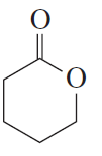
Show the mechanism for the acid-catalyzed formation of 23c starting with the product obtained from its hydrolysis.
Mechanism diagram illustrating acid-catalyzed ester hydrolysis, starting from the hydrolysis product.

Guida verificata passo dopo passo
1
Identify the product obtained from the hydrolysis reaction. Hydrolysis typically involves breaking a bond in the presence of water, often yielding a carboxylic acid, alcohol, or other functional groups depending on the starting material.
Determine the structure of 23c and analyze its functional groups. This will help you understand the transformation required to form 23c from the hydrolysis product.
Propose the acid-catalyzed mechanism. Acid catalysis often involves protonation of a functional group to make it more electrophilic or reactive. For example, if the hydrolysis product contains a carbonyl group, protonation of the carbonyl oxygen will increase the electrophilicity of the carbonyl carbon.
Outline the nucleophilic attack or rearrangement step. After protonation, a nucleophile (such as an alcohol or water) may attack the electrophilic center, or a rearrangement may occur to form the desired product, 23c.
Conclude the mechanism by showing the deprotonation step to regenerate the acid catalyst and stabilize the final product, 23c. Ensure all intermediates and electron-pushing arrows are accounted for in the mechanism.

Risposta video verificata per un problema simile:

Questa soluzione video è stata consigliata dai nostri tutor come utile per risolvere questo problema.
Durata del video:
6m

Concetti chiave

Ecco i concetti essenziali che devi comprendere per rispondere correttamente alla domanda.

Acid-Catalyzed Reactions

Acid-catalyzed reactions involve the use of an acid to increase the rate of a chemical reaction. In organic chemistry, acids can donate protons (H+) to facilitate the formation of reactive intermediates, such as carbocations. This mechanism often leads to the rearrangement or transformation of molecules, making it essential for understanding how certain products are formed from their precursors.
Video consigliato:
03:09
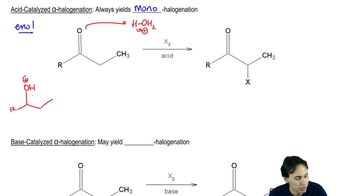
Acid Catalyzed

Hydrolysis

Hydrolysis is a chemical reaction in which water is used to break down a compound. In organic chemistry, hydrolysis often involves the cleavage of bonds in larger molecules, resulting in smaller products. Understanding hydrolysis is crucial for tracing the origin of the starting material in the acid-catalyzed formation of a product, as it provides insight into the functional groups and structural changes involved.
Video consigliato:
Percorso guidato
1:00
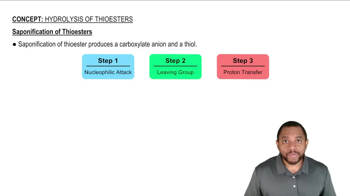
Hydrolysis of Thioesters Concept 2

Reaction Mechanism

A reaction mechanism is a step-by-step description of the process by which reactants are converted into products. It outlines the sequence of elementary steps, including the formation and transformation of intermediates. Analyzing the mechanism is vital for predicting the outcome of a reaction, understanding the role of catalysts, and identifying the conditions necessary for the reaction to proceed.
Video consigliato:
02:16
Heck Reaction Mechanism