Ch. 18 - Reactions of Benzene and Substituted Benzenes
Bruice - Organic Chemistry 8th Edition
Bruice8th EditionOrganic ChemistryISBN: 9780135213711Non è quello che usi tu?Cambia libro di testo
Capitolo 18, Problema 70(a)

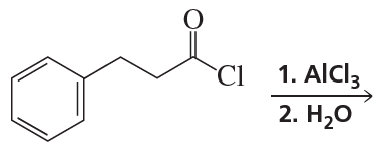
What are the products of the following reactions?
a. Chemical structure showing a benzene ring with an acyl chloride, labeled with reaction steps using AlCl3 and water.

Guida verificata passo dopo passo
1
Step 1: Identify the type of reaction taking place. Determine whether the reaction is substitution, addition, elimination, or another type based on the reactants and conditions provided.
Step 2: Analyze the reactants. Look at the functional groups, molecular structure, and any reagents or catalysts involved in the reaction.
Step 3: Predict the mechanism of the reaction. For example, if it is a substitution reaction, determine whether it follows an SN1 or SN2 mechanism based on the substrate and conditions.
Step 4: Write out the intermediate steps of the reaction, if applicable. For instance, if the reaction involves a carbocation intermediate, show how it forms and rearranges.
Step 5: Determine the final products by completing the reaction mechanism and considering factors like regioselectivity, stereoselectivity, and stability of the products.

Risposta video verificata per un problema simile:

Questa soluzione video è stata consigliata dai nostri tutor come utile per risolvere questo problema.

Concetti chiave

Ecco i concetti essenziali che devi comprendere per rispondere correttamente alla domanda.

Reaction Mechanisms

Understanding reaction mechanisms is crucial in organic chemistry as they describe the step-by-step process by which reactants transform into products. This includes identifying intermediates, transition states, and the types of bonds formed or broken during the reaction. Familiarity with mechanisms helps predict the products of reactions based on the nature of the reactants and conditions.
Video consigliato:
02:16
Heck Reaction Mechanism

Functional Groups

Functional groups are specific groups of atoms within molecules that are responsible for the characteristic chemical reactions of those molecules. Recognizing functional groups is essential for predicting the behavior of organic compounds in reactions, as they dictate reactivity, polarity, and the types of products formed. Common functional groups include alcohols, carboxylic acids, and amines.
Video consigliato:
02:36
Identifying Functional Groups

Stoichiometry

Stoichiometry involves the calculation of reactants and products in chemical reactions based on the conservation of mass. It allows chemists to determine the proportions of substances involved in reactions, which is vital for predicting yields and understanding the efficiency of reactions. Mastery of stoichiometry is essential for accurately determining the products and their quantities in organic reactions.
Video consigliato:
02:08
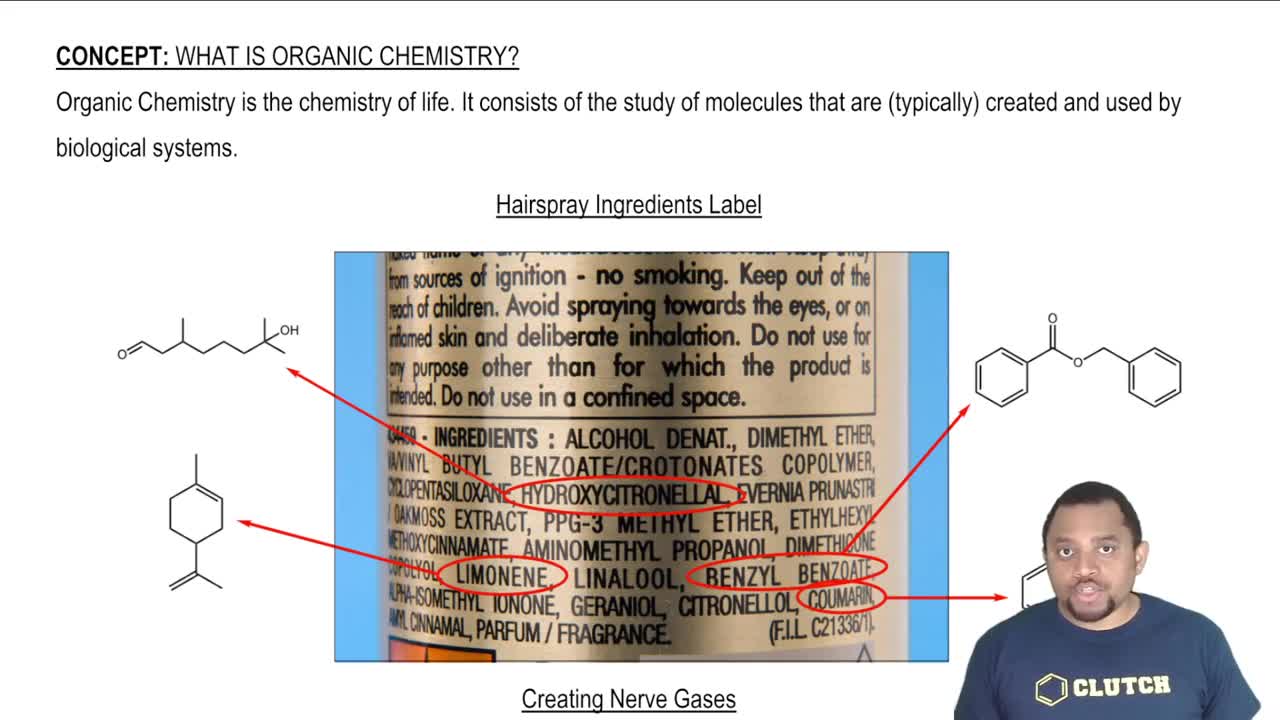
Organic molecules in your everyday life.