Ch. 22 - Catalysis in Organic Reactions and in Enzymatic Reactions
Bruice - Organic Chemistry 8th Edition
Bruice8th EditionOrganic ChemistryISBN: 9780135213711Non è quello che usi tu?Cambia libro di testo
Capitolo 22, Problema 16

Which of the following C-terminal peptide bonds is more readily cleaved by carboxypeptidase A? Explain your choice.
Ser-Ala-Leu or Ser-Ala-Asp

Guida verificata passo dopo passo
1
Understand the role of carboxypeptidase A: Carboxypeptidase A is an enzyme that cleaves the C-terminal peptide bond of a polypeptide chain. It preferentially cleaves bonds where the C-terminal amino acid has a nonpolar or hydrophobic side chain, such as aliphatic or aromatic residues.
Analyze the C-terminal amino acid in Ser-Ala-Leu: The C-terminal amino acid here is Leu (Leucine), which has a nonpolar, hydrophobic side chain. This makes it a good substrate for carboxypeptidase A.
Analyze the C-terminal amino acid in Ser-Ala-Asp: The C-terminal amino acid here is Asp (Aspartic acid), which has a polar, negatively charged side chain. Carboxypeptidase A is less efficient at cleaving bonds involving polar or charged residues.
Compare the two peptide sequences: Since Leu is nonpolar and hydrophobic, it is more readily cleaved by carboxypeptidase A compared to Asp, which is polar and charged.
Conclude the reasoning: The peptide Ser-Ala-Leu is more readily cleaved by carboxypeptidase A than Ser-Ala-Asp due to the preference of the enzyme for nonpolar, hydrophobic C-terminal residues like Leu over polar, charged residues like Asp.

Risposta video verificata per un problema simile:

Questa soluzione video è stata consigliata dai nostri tutor come utile per risolvere questo problema.
Durata del video:
5m

Concetti chiave

Ecco i concetti essenziali che devi comprendere per rispondere correttamente alla domanda.

Carboxypeptidase A Function

Carboxypeptidase A is an enzyme that catalyzes the hydrolysis of peptide bonds at the C-terminal end of proteins and peptides. It specifically cleaves bonds adjacent to aromatic or branched-chain amino acids, which influences its substrate specificity. Understanding the enzyme's mechanism and preferred substrates is crucial for predicting which peptide bond will be cleaved more readily.
Video consigliato:
02:36
Identifying Functional Groups

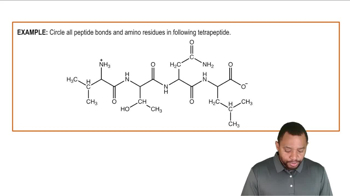
Peptide Bond Characteristics

Peptide bonds are formed between the carboxyl group of one amino acid and the amino group of another, resulting in a covalent bond. The nature of the amino acids involved, particularly their side chains, can affect the stability and reactivity of the peptide bond. In this context, the presence of an acidic side chain, like aspartic acid (Asp), can influence the cleavage by carboxypeptidase A.
Video consigliato:
Percorso guidato
1:24
Peptides Example 1

Amino Acid Properties

Amino acids have distinct properties based on their side chains, which can affect enzyme interactions. For instance, Serine (Ser) and Alanine (Ala) are neutral, while Aspartic acid (Asp) is negatively charged. The presence of Asp at the C-terminus in the peptide Ser-Ala-Asp may make this bond more favorable for cleavage by carboxypeptidase A compared to the neutral peptide Ser-Ala-Leu.
Video consigliato:
04:10
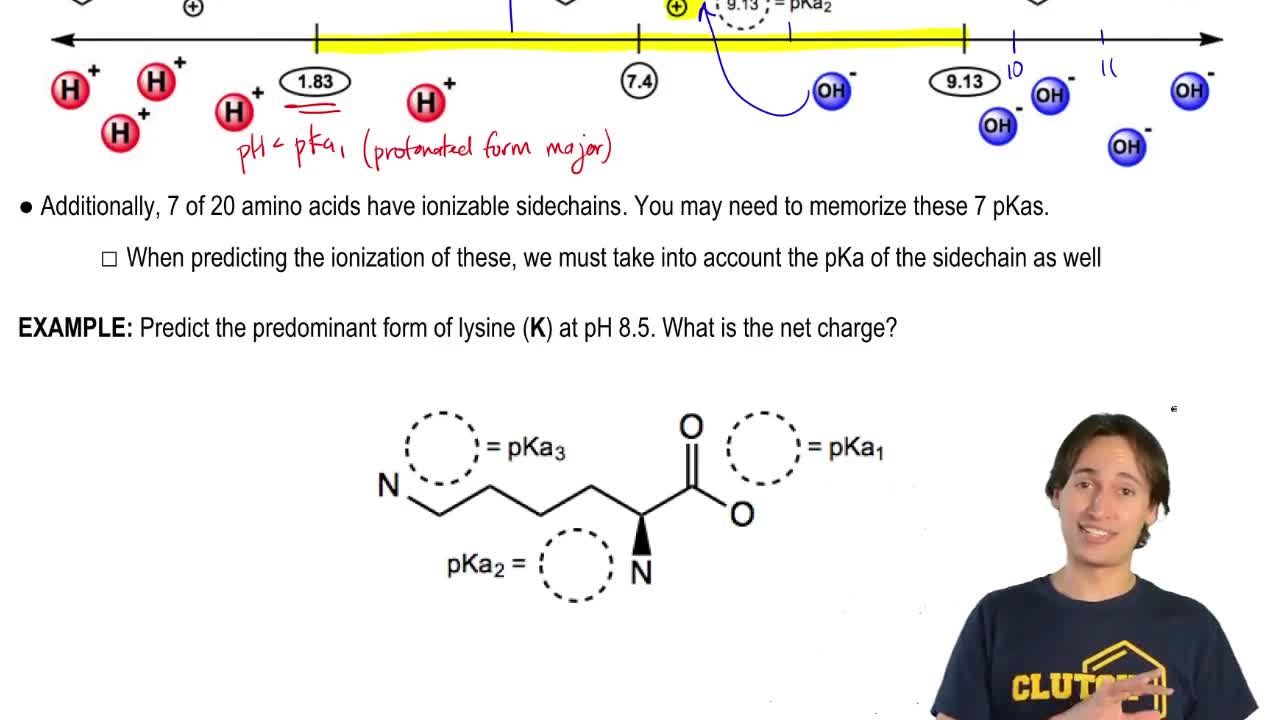
The 7 Ionizable Amino Acids