Ch. 9 - Substitution and Elimination Reactions of Alkyl Halides
Bruice - Organic Chemistry 8th Edition
Bruice8th EditionOrganic ChemistryISBN: 9780135213711Non è quello che usi tu?Cambia libro di testo
Capitolo 9, Problema 53a

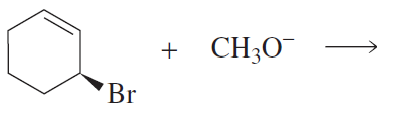
What products are formed from the following reactions?
a. Chemical reaction diagram showing bromobenzene reacting with methoxide ion to form products.

Guida verificata passo dopo passo
1
Identify the type of reaction taking place (e.g., substitution, elimination, addition, etc.) by analyzing the reactants and reaction conditions provided in the problem.
Determine the functional groups present in the reactants and predict how they might interact based on the reaction mechanism (e.g., nucleophilic attack, electrophilic addition, etc.).
Write out the mechanism step-by-step, showing how bonds are broken and formed. Use curved arrows to indicate the movement of electrons during each step of the reaction.
Predict the major product(s) based on the stability of intermediates (e.g., carbocations, radicals) and the regioselectivity or stereoselectivity of the reaction, if applicable.
Verify the products by considering any side reactions, rearrangements, or competing pathways that might occur under the given reaction conditions.

Risposta video verificata per un problema simile:

Questa soluzione video è stata consigliata dai nostri tutor come utile per risolvere questo problema.
Durata del video:
2m

Concetti chiave

Ecco i concetti essenziali che devi comprendere per rispondere correttamente alla domanda.

Reaction Mechanisms

Understanding reaction mechanisms is crucial in organic chemistry as they describe the step-by-step process by which reactants transform into products. This includes identifying intermediates, transition states, and the movement of electrons. Familiarity with mechanisms helps predict the products of reactions and the conditions under which they occur.
Video consigliato:
02:16
Heck Reaction Mechanism

Functional Groups

Functional groups are specific groups of atoms within molecules that are responsible for the characteristic chemical reactions of those molecules. Recognizing functional groups is essential for predicting the behavior of organic compounds during reactions, as they dictate reactivity and the types of products formed.
Video consigliato:
02:36
Identifying Functional Groups

Types of Reactions

Organic chemistry encompasses various types of reactions, including substitution, addition, elimination, and rearrangement reactions. Each type has distinct characteristics and mechanisms that influence the products formed. Understanding these types allows chemists to anticipate the outcomes of reactions based on the reactants involved.
Video consigliato:
07:37
Properties and Types of Pericyclic Reactions