Ch. 23 - Benzene 1: Aromatic Stability and Substitution Reactions
Mullins - Organic Chemistry: A Learner Centered Approach 1st Edition
Mullins1st EditionOrganic Chemistry: A Learner Centered ApproachISBN: 9780137566471Non è quello che usi tu?Cambia libro di testo
Capitolo 22, Problema 55

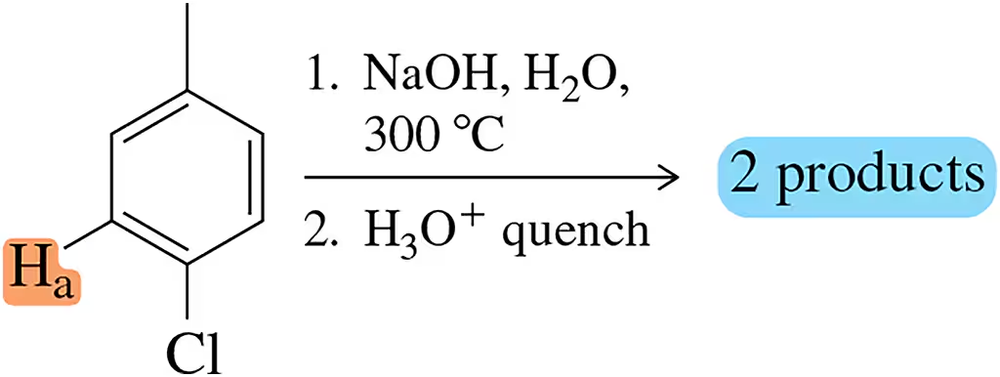
Assume that Ha is the proton removed in the first step of the benzyne mechanism with p-chlorotoluene. Draw the benzyne intermediate and identify the two products that will result.

Guida verificata passo dopo passo
1
Identify the starting material as p-chlorotoluene, where the chlorine atom is para to the methyl group on the benzene ring.
Recognize that the benzyne mechanism involves the elimination of a hydrogen atom (Ha) and a leaving group (Cl) to form a triple bond in the benzene ring, creating a benzyne intermediate.
In the first step, NaOH at high temperature deprotonates the hydrogen (Ha) adjacent to the chlorine, forming a carbanion.
The carbanion then expels the chloride ion, resulting in the formation of the benzyne intermediate, characterized by a triple bond between two adjacent carbon atoms in the benzene ring.
The benzyne intermediate can undergo nucleophilic attack at either of the two carbons involved in the triple bond, leading to two possible products after quenching with H3O+.

Risposta video verificata per un problema simile:

Questa soluzione video è stata consigliata dai nostri tutor come utile per risolvere questo problema.

Concetti chiave

Ecco i concetti essenziali che devi comprendere per rispondere correttamente alla domanda.

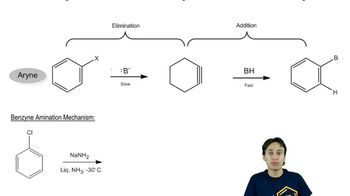
Benzyne Mechanism

The benzyne mechanism involves the formation of a highly reactive intermediate known as benzyne, which occurs when a hydrogen atom is removed from a benzene ring, typically in the presence of strong bases. This intermediate features a triple bond between two carbon atoms in the aromatic ring, leading to unique reactivity patterns that differ from typical electrophilic aromatic substitution.
Video consigliato:
06:06
General Mechanism

Proton Abstraction

Proton abstraction is the process of removing a proton (H+) from a molecule, often facilitated by a strong base. In the context of the benzyne mechanism, the proton removed (H_a) is crucial for generating the benzyne intermediate, which then undergoes further reactions to yield final products. Understanding this step is essential for predicting the outcome of the reaction.
Video consigliato:
03:
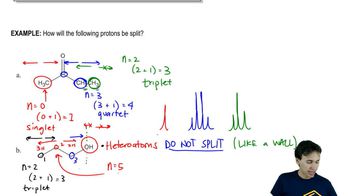
Proton Splitting

Product Formation

The formation of products in organic reactions often involves the rearrangement of intermediates and the addition of nucleophiles. In the case of the benzyne mechanism, the benzyne intermediate can react with nucleophiles or undergo further transformations, leading to the formation of two distinct products. Identifying these products requires knowledge of the reaction conditions and the nature of the substituents on the aromatic ring.
Video consigliato:
11:07
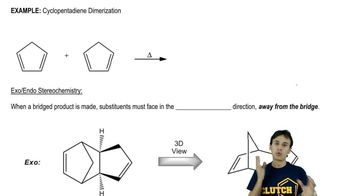
Bridged-Products