Ch. 23 - Benzene 1: Aromatic Stability and Substitution Reactions
Mullins - Organic Chemistry: A Learner Centered Approach 1st Edition
Mullins1st EditionOrganic Chemistry: A Learner Centered ApproachISBN: 9780137566471Non è quello che usi tu?Cambia libro di testo
Capitolo 22, Problema 66

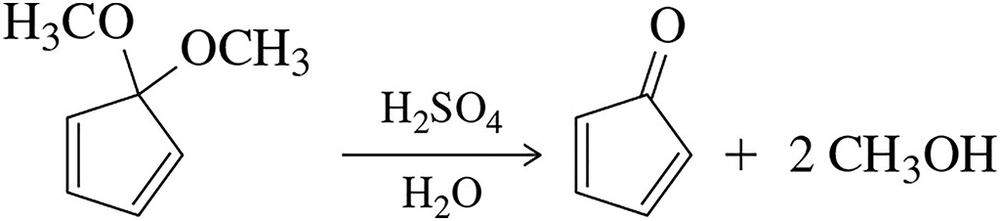
In Section 17.7.4, we studied the acid-catalyzed hydrolysis of acetals. The acetal shown here resists hydrolysis by the mechanism in Figure 17.63. Why? [Draw the intermediates as if the reaction would occur, then analyze the intermediates for any problems.]
Chemical reaction diagram showing acetal hydrolysis with sulfuric acid and water, producing a carbonyl compound and methanol.

Guida verificata passo dopo passo
1
Identify the acetal structure in the given compound. The acetal is characterized by two alkoxy groups (OCH3) attached to the same carbon atom.
Understand the mechanism of acid-catalyzed hydrolysis of acetals. This typically involves protonation of one of the alkoxy groups, making it a better leaving group.
Draw the first intermediate by protonating one of the methoxy groups (OCH3) using the acid catalyst (H2SO4). This will form a positively charged oxonium ion.
Consider the stability of the carbocation that would form if the methoxy group leaves. In this case, the carbocation would be on a carbon that is part of a five-membered ring, which is less stable due to ring strain.
Analyze the potential for resonance stabilization of the carbocation. In this structure, the carbocation cannot be stabilized by resonance with the aromatic ring, making it less favorable for the reaction to proceed.

Risposta video verificata per un problema simile:

Questa soluzione video è stata consigliata dai nostri tutor come utile per risolvere questo problema.

Concetti chiave

Ecco i concetti essenziali che devi comprendere per rispondere correttamente alla domanda.

Acetal Hydrolysis

Acetal hydrolysis is a reaction where acetals are converted back into their corresponding carbonyl compounds and alcohols in the presence of an acid and water. This process typically involves the protonation of the acetal oxygen, leading to the formation of a carbocation intermediate, which can then react with water to regenerate the carbonyl compound and alcohol. Understanding this mechanism is crucial for analyzing why certain acetals resist hydrolysis.
Video consigliato:
04:29
Acetal Protecting Group

Mechanism of Acid-Catalyzed Reactions

In acid-catalyzed reactions, the presence of an acid facilitates the reaction by protonating key functional groups, enhancing their reactivity. This mechanism often involves the formation of intermediates that can lead to different pathways, including rearrangements or elimination reactions. Analyzing the intermediates formed during the hydrolysis of acetals can reveal potential stability issues that prevent the reaction from proceeding.
Video consigliato:
06:34
Acid-catalyzed hydration mechanism

Stability of Intermediates

The stability of intermediates formed during a chemical reaction is critical in determining the feasibility of the reaction pathway. In the case of acetal hydrolysis, if the intermediates are highly unstable or prone to rearrangement, the reaction may not proceed as expected. Evaluating the structure and electronic properties of these intermediates can provide insights into why certain acetals resist hydrolysis under acidic conditions.
Video consigliato:
04:31
Stability of Conjugated Intermediates