
Ch. 17 - Temperature, Thermal Expansion, and the Ideal Gas Law
Giancoli Douglas - Physics for Scientists and Engineers 5th edition
Giancoli Douglas5th editionPhysics for Scientists and EngineersISBN: 9780137488179Non è quello che usi tu?Cambia libro di testo
Capitolo 17, Problema 5

A thermometer tells you that you have a fever of 38.5°C. What is this in Fahrenheit?

Guida verificata passo dopo passo
1
Start with the formula to convert Celsius to Fahrenheit: F=95⁢C+32, where F is the temperature in Fahrenheit and C is the temperature in Celsius.
Substitute the given Celsius temperature (38.5°C) into the formula: F=95⁢38.5+32.
Simplify the multiplication term: Calculate 95⁢38.5.
Add 32 to the result of the multiplication to complete the conversion: F=(result of multiplication)+32.
The final value of F will give the temperature in Fahrenheit.

Risposta video verificata per un problema simile:

Questa soluzione video è stata consigliata dai nostri tutor come utile per risolvere questo problema.
Durata del video:
1m

Concetti chiave

Ecco i concetti essenziali che devi comprendere per rispondere correttamente alla domanda.

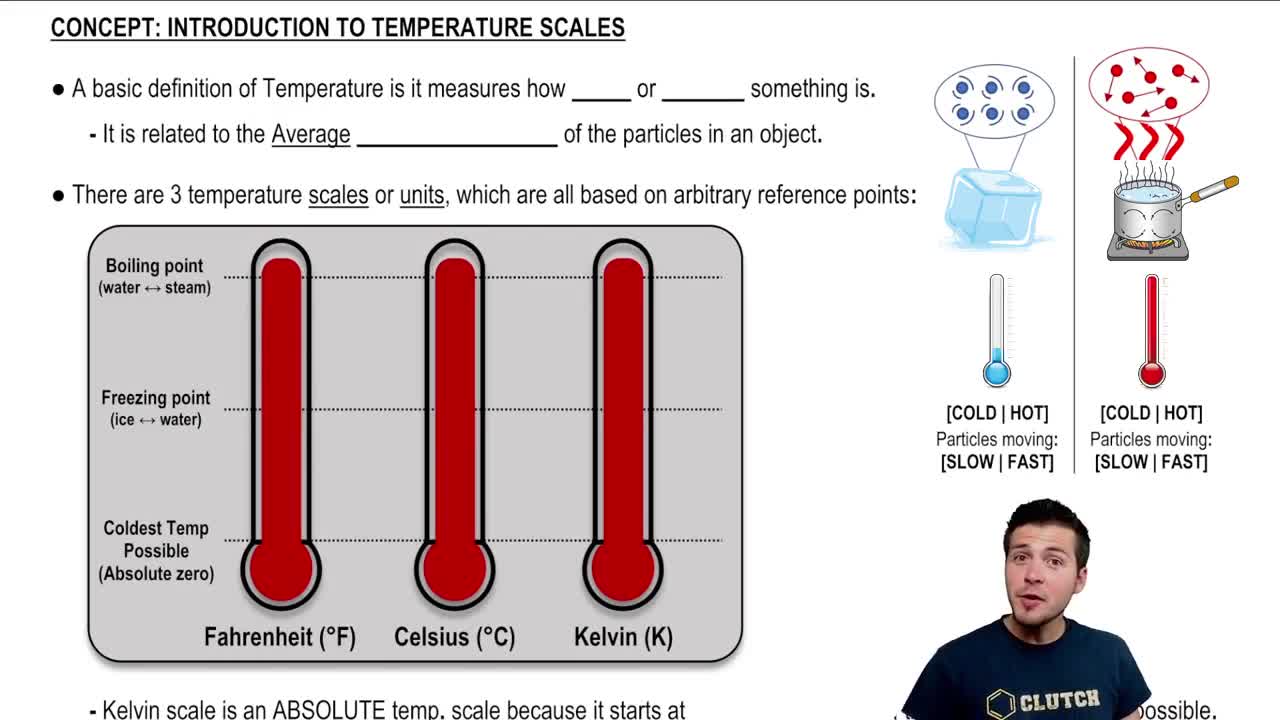
Temperature Scales

Temperature can be measured using different scales, the most common being Celsius (°C) and Fahrenheit (°F). The Celsius scale is based on the freezing and boiling points of water, while the Fahrenheit scale is based on a different set of reference points. Understanding how these scales relate to each other is essential for converting temperatures accurately.
Video consigliato:
Percorso guidato
04:54
Introduction To Temperature Scales

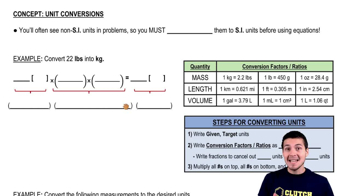
Conversion Formula

To convert a temperature from Celsius to Fahrenheit, the formula used is F = (C × 9/5) + 32. This formula accounts for the difference in the size of the degree increments between the two scales. Mastery of this formula is crucial for solving problems that require temperature conversion.
Video consigliato:
Percorso guidato
07:46
Unit Conversions

Thermal Equilibrium

Thermal equilibrium refers to the state in which two objects in contact do not exchange heat, meaning they are at the same temperature. Understanding this concept is important when discussing temperature measurements, as it ensures that the thermometer accurately reflects the temperature of the object being measured, such as the human body in this case.
Video consigliato:
Percorso guidato
05:21
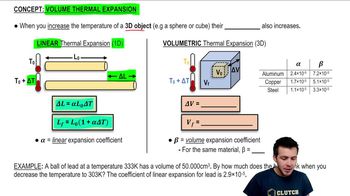
Volume Thermal Expansion