 Indietro
Chap 3-4
 05:14

Termini in questo insieme (30)
A drug that mimics or strengthens the effects of a neurotransmitter.
A drug that blocks or impedes the normal activity of a given neurotransmitter.
A specific version of a gene.
An allele whose phenotype will be expressed in an individual that possesses that allele.
An allele whose phenotype will be expressed only if an individual is homozygous for that allele.
Consisting of two identical alleles.
Consisting of two different alleles.
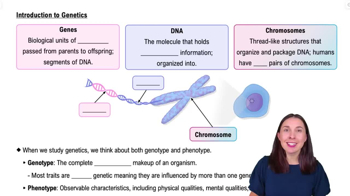
The genetic makeup of an individual.
An individual’s inheritable physical characteristics.
A sequence of DNA that controls or partially controls physical characteristics.
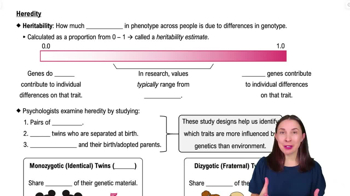
The study of gene-environment interactions, such as how the same genotype leads to different phenotypes.
The nervous system's ability to change in response to experience or injury.
Cells in the nervous system that act as interconnected information processors.
Chemical messenger of the nervous system.
Structure in the limbic system involved in emotion and tying emotional meaning to memories.
Forebrain structure that regulates sexual motivation, homeostasis, and links the nervous and endocrine systems.
Collection of brain structures involved in processing emotion and memory.
Controls internal organs and glands, including the sympathetic and parasympathetic divisions.
Activation of the sympathetic nervous system to prepare the body to fight or flee from threat.
State of equilibrium where biological conditions like body temperature are maintained at optimal levels.
Hindbrain structure controlling balance, coordination, movement, motor skills, and some memory processing.
Imaging technique using magnetic fields to produce pictures of tissue.
Biological rhythm that occurs over approximately 24 hours, regulating sleep-wake cycles.
Hormone secreted by the endocrine gland that regulates the sleep-wake cycle.
Sleep disorder characterized by episodes where breathing stops during sleep.
Consistent difficulty falling or staying asleep for at least three nights a week over a month.
Sleep stage with brain waves similar to wakefulness and darting eye movements under closed eyelids.
First sleep stage; transitional phase between wakefulness and sleep where a person drifts off.
Second sleep stage; body enters deep relaxation and sleep spindles appear.
Deep sleep stage characterized by low frequency, high amplitude delta waves.