 Indietro
Chapter 6
 00:11

Termini in questo insieme (21)
A circadian rhythm is a roughly 24-hour cycle in the physiological processes of living beings, influencing sleep-wake patterns, hormone release, and body temperature.
The SCN is a brain region in the hypothalamus that acts as the body’s master clock, regulating circadian rhythms by responding to light cues.
Melatonin is a hormone released by the pineal gland that promotes sleep by signaling the body that it is nighttime, helping regulate the sleep-wake cycle.
Internal desynchronization occurs when the body's internal circadian rhythms are out of sync with the external environment, often causing sleep problems and fatigue.
SAD is a mood disorder related to changes in seasons, typically causing depression during winter months due to reduced sunlight affecting circadian rhythms.
An infradian rhythm is a biological cycle longer than 24 hours, such as the menstrual cycle or seasonal breeding patterns in animals.
Premenstrual dysphoric disorder is a severe mood disorder linked to the menstrual cycle, an infradian rhythm, causing emotional and physical symptoms before menstruation.
An ultradian rhythm is a biological cycle shorter than 24 hours, such as the stages of sleep or the 90-minute cycles of REM and non-REM sleep.
We sleep to restore the body and brain, consolidate memories, regulate emotions, and support overall health and cognitive function.
Sleep deprivation impairs memory, attention, immune function, and mood. The article "Secrets of Sleep" shows evidence of cognitive decline and health risks from lack of sleep.
Randy Gardner is known for staying awake for 11 days in a sleep deprivation experiment, demonstrating the severe effects of prolonged lack of sleep.
Factors include individual differences, duration of deprivation, prior sleep quality, and the type of tasks performed during deprivation.
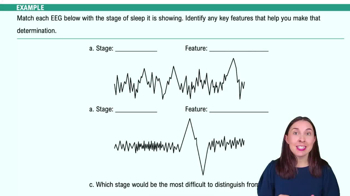
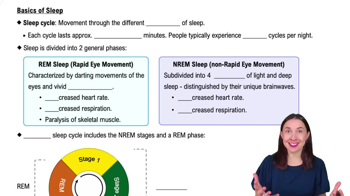
Sleep stages include NREM stages 1-3 (light to deep sleep) and REM sleep, characterized by different brain wave patterns and physiological changes.
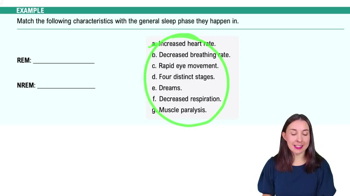
REM sleep features rapid eye movements, vivid dreaming, muscle paralysis, and brain activity similar to wakefulness, unlike deeper NREM stages.
Examples include insomnia, sleep apnea, narcolepsy, and restless leg syndrome, each affecting sleep quality and health differently.
Dream theories like Freud's wish fulfillment and the activation-synthesis model explain dreams as expressions of unconscious desires or brain activity during sleep.
Psychoactive drugs are classified as stimulants (e.g., caffeine), depressants (e.g., alcohol), hallucinogens (e.g., LSD), and mixed category drugs with combined effects.
Mixed category drugs have complex effects that do not fit neatly into stimulant, depressant, or hallucinogen classes, leading to debate about their classification.
Drugs affect the brain by altering neurotransmitter activity, receptor binding, or neural communication, such as stimulants increasing dopamine release.
The four aspects are tolerance, withdrawal, dependence, and psychological effects like mood changes or altered perception.
Culture shapes attitudes, usage patterns, and legal status of drugs, influencing how societies perceive and regulate psychoactive substances.