Skip to main content
Introduction to Psychology
Il mio corso
Impara
Preparazione agli esami
AI Tutor
Guide di studio
Flashcard
Esplora
Prova l'app
Il mio corso
Impara
Preparazione agli esami
AI Tutor
Guide di studio
Flashcard
Esplora
Prova l'app
Indietro
Introduction to Psychology: Biology and Psychology Basics
Puoi toccare per girare la carta.
What is the scientific method in psychology?
Puoi toccare per girare la carta.
👆
What is the scientific method in psychology?
A systematic process
of asking questions, gathering evidence, drawing conclusions, and developing or modifying theories.
Avanzamenti del tracciato
I pulsanti di controllo sono stati cambiati in modalità "navigazione".
1/20
Video consigliati
VideoThumbView.guidedCourse
01:06
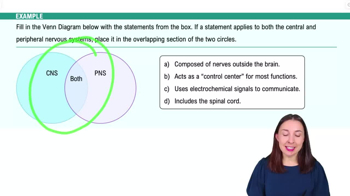
Organization of the Nervous System Example 1
1182
views
18
rank
VideoThumbView.guidedCourse
01:46
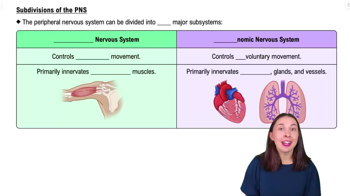
Subdivisions of the PNS
1093
views
16
rank
VideoThumbView.guidedCourse
04:32
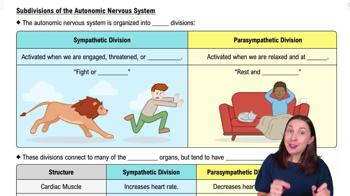
Subdivisions of the Autonomic Nervous System
1100
views
13
rank
Termini in questo insieme (20)
Nascondere definizioni
What is the scientific method in psychology?
A systematic process
of asking questions, gathering evidence, drawing conclusions, and developing or modifying theories.
Why is research on treatment outcomes important in psychology?
It allows psychologists to determine whether treatments are
supported by evidence
.
What does a negative correlation between two variables mean?
When one variable increases, the other
decreases
.
What is it called when there is no relationship between two variables?
The variables are said to be
uncorrelated
.
What is the numerical representation of the strength of a correlation?
It is called the
correlation coefficient
.
What does 'Two-Eyed Seeing' refer to in research?
Using both Indigenous ways of knowing and Western scientific approaches together, valuing the strengths of both.
What is Community-Based Participatory Research (CBPR)?
A research approach where the researcher works
collaboratively with community members
throughout the process.
What is a major criticism of historical research with Indigenous peoples?
Research was often done
on Indigenous people rather than with them
.
Which research approach best addresses historical criticisms in Indigenous research?
Developing research questions, methods, and interpretation
in collaboration with the community
.
What are the two main divisions of the nervous system?
The
Central Nervous System (CNS)
and the
Peripheral Nervous System (PNS)
.
What does the Peripheral Nervous System include?
The
somatic system
(voluntary movement) and the
autonomic system
(involuntary movement).
What are the two parts of the autonomic nervous system?
The
sympathetic system
(fight or flight) and the
parasympathetic system
(rest and digest).
What is the role of the limbic system?
It regulates
memory, learning, motivation, rewards, homeostasis, and emotional responses
.
How can understanding the brain help healthcare professionals?
It can reduce
shame and stigma
and improve
coping strategies
.
What are the three layers of the brain commonly described as?
Cortex
(primate brain),
subcortical
(mouse brain), and
brain stem/cerebellum
(reptilian brain).
What is brain plasticity?
The brain's ability to
adapt and change
throughout the lifespan.
Give an example of brain plasticity in humans.
Taxi drivers have a
larger hippocampus
compared to non-taxi drivers due to spatial navigation experience.
What did Hebb (1949) propose about learning and the brain?
Information is stored in the
synapse
, which strengthens with repeated stimulation.
What are maladaptive effects of neuroplasticity?
Repeated exposure to
chronic stress, trauma, or addictive substances
can cause harmful brain changes.
What nervous system activates the 'fight or flight' response?
The
sympathetic nervous system
.
 IndietroIndietro
 01:06