 Indietro
Introduction to Psychology Key Concepts
 01:26

Termini in questo insieme (15)
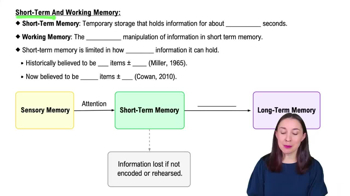
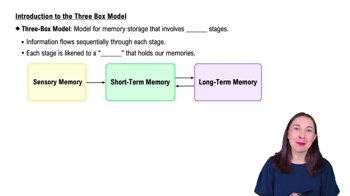
Memory is the process of encoding, storing, and retrieving information.
Encoding is the initial learning of information; converting sensory input into a form that can be stored.
Storage refers to maintaining encoded information over time.
Retrieval is the process of recalling stored information when needed.
Mental set is a tendency to approach problems using a mindset that has worked previously.
Confirmation bias is the tendency to search for or interpret information in a way that confirms one’s preconceptions.
Personal fable is the belief that one is unique and special, often seen in adolescent egocentrism.
Imaginary audience is the belief that others are constantly watching and evaluating one’s behavior.
Convergent thinking involves finding a single best solution to a problem.
Divergent thinking is generating many possible solutions to a problem; creativity-focused.
Crystallized intelligence is the ability to use learned knowledge and experience.
Fluid intelligence is the capacity to solve new problems, use logic, and identify patterns.
Parallel distributed processing is a model where information is processed simultaneously across a network of neurons.
Triarchic theory proposes three types of intelligence: analytical, creative, and practical.
Social psychology studies how individuals think, feel, and behave in social contexts.