 Indietro
Introduction to Psychology Key Concepts

 03:13


Termini in questo insieme (9)
Problem solving is the cognitive process of finding solutions to difficult or complex issues.
Scaffolding is a learning technique where support is given to help a learner achieve a task, gradually removed as competence increases.
The bystander effect is a social psychological phenomenon where individuals are less likely to help a victim when others are present.
An algorithm is a step-by-step procedure or formula for solving a problem.
Temperament refers to the innate traits that influence how one thinks, behaves, and reacts emotionally.
Bandwagon appeal is a logical fallacy that suggests one should do something because everyone else is doing it.
Functional fixedness is a cognitive bias limiting a person to using an object only in the way it is traditionally used.
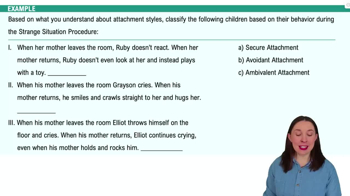
Attachment is the emotional bond between a child and caregiver that influences social and emotional development.
Rational appeal is a persuasive technique that uses logical arguments and factual evidence to influence others.