 Indietro
Introduction to Psychology: Stress and Coping
 04:01

Termini in questo insieme (41)
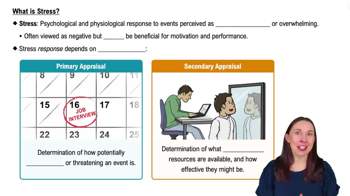
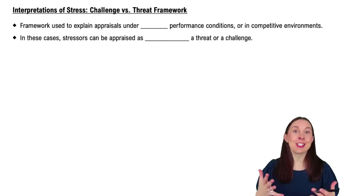
Stress is the physical, emotional, cognitive, and behavioral responses to events appraised as threatening or challenging.
Stressors are events that cause a stress reaction.
Distress is the effect of unpleasant and undesirable stressors.
Eustress is the effect of positive events or the optimal amount of stress needed to promote health and well-being.
A catastrophe is an unpredictable, large-scale event causing overwhelming feelings of threat and a need to adapt.
The SRRS measures the amount of stress in a person's life over one year from major life events.
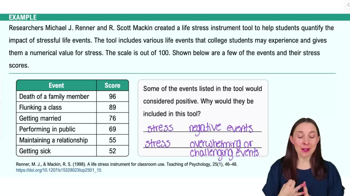
The CUSS measures stress from major life events specifically in college students over one year.
Pressure is the psychological experience from urgent demands or expectations for behavior coming from outside sources.
Frustration is the psychological experience produced by blocking a desired goal or need fulfillment.
Aggression refers to actions intended to harm physically or psychologically.
Displaced aggression is taking out frustrations on a less threatening target.
Escape or withdrawal means leaving the presence of a stressor literally or psychologically (e.g., fantasy, drug abuse).
An approach-approach conflict involves choosing between two attractive alternatives.
An avoidance-avoidance conflict involves choosing between two distasteful alternatives.
An approach-avoidance conflict occurs when a goal has both positive and negative aspects.
A multiple approach-avoidance conflict involves deciding among several goals, each with positive and negative aspects.
General Adaptation Syndrome describes the body's three-stage physiological reaction to stress: alarm, resistance, and exhaustion.
The immune system is the body's cells, organs, and chemicals that respond to disease, infection, and injury.
Psychoneuroimmunology studies how psychological factors affect the immune system.
CHD is the buildup of plaque in arteries leading to heart problems.
NK cells are immune cells that suppress viruses and destroy tumor cells.
Health psychology studies how physical activities, traits, and social relationships affect health and illness rates.
Primary appraisal is assessing the severity of a stressor and classifying it as a threat or challenge.
Secondary appraisal is estimating resources available to cope with a stressor.
The Yerkes-Dodson Law states that simple tasks benefit from higher arousal, while difficult tasks benefit from lower arousal.
Type A individuals are ambitious, time-conscious, hardworking, and prone to hostility and anger.
Type B individuals are relaxed, laid-back, less competitive, and slow to anger.
Type C individuals are pleasant, cooperative, internalize anger and anxiety, and find expressing emotions difficult.
Type D or "distressed" individuals experience negative emotions and avoid sharing them due to fear of rejection.
Hardy personality individuals thrive on stress but lack the anger and hostility of Type A.
Optimists expect positive outcomes.
Burnout is negative changes in thoughts, emotions, and behavior from prolonged stress, leading to exhaustion.
Acculturative stress results from adapting to a majority culture.
Homeopathy treats disease by introducing minute amounts of substances that cause disease in larger doses.
Coping strategies are actions to master, tolerate, reduce, or minimize stress effects.
Problem-focused coping aims to eliminate or reduce the source of stress through direct action.
Emotion-focused coping changes the emotional impact of a stressor rather than the stressor itself.
Meditation involves mental exercises to refocus attention and achieve an altered state of consciousness.
Concentrative meditation focuses the mind on a repetitive stimulus to clear disturbing thoughts and relax the body.
Mindfulness meditation involves paying purposeful, nonjudgmental attention to the present moment.
A social support system is a network of people who offer support, comfort, or aid in times of need.