Which cell would be best for studying lysosomes?
a. muscle cell
b. nerve cell
c. bacterial cell
d. phagocytic white blood cell
Guida verificata passo dopo passo
1
Identify the function of lysosomes, which are organelles involved in breaking down waste materials and cellular debris.
Consider the role of each cell type in the body: muscle cells are involved in contraction, nerve cells in signal transmission, bacterial cells are prokaryotic and lack lysosomes, and phagocytic white blood cells are involved in engulfing and digesting pathogens.
Recognize that phagocytic white blood cells, such as macrophages, have a high number of lysosomes to digest engulfed materials.
Understand that the presence of lysosomes is crucial for the function of phagocytic cells, as they need to break down ingested particles.
Conclude that a phagocytic white blood cell would be the best choice for studying lysosomes due to its high lysosomal activity.
Risposta video verificata per un problema simile:
Questa soluzione video è stata consigliata dai nostri tutor come utile per risolvere questo problema.
Durata del video:
38s
Guarda un video:
0 Commenti
Concetti chiave
Ecco i concetti essenziali che devi comprendere per rispondere correttamente alla domanda.
Lysosomes
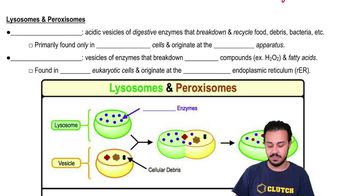
Lysosomes are membrane-bound organelles found in eukaryotic cells that contain digestive enzymes. They play a crucial role in breaking down waste materials, cellular debris, and foreign invaders. Their function is particularly important in cells that engage in phagocytosis, where they digest engulfed particles.
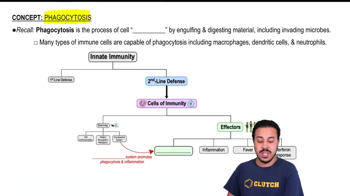
Phagocytosis is a cellular process in which certain cells, known as phagocytes, engulf and digest large particles, such as bacteria or dead cells. This process is vital for the immune response, as it helps eliminate pathogens and maintain tissue homeostasis. Phagocytic white blood cells, like macrophages, are specialized for this function.
Different cell types have varying functions and organelle compositions based on their roles in the body. Muscle cells are primarily involved in contraction, nerve cells in signal transmission, and bacterial cells lack lysosomes entirely. Understanding these distinctions helps identify which cell type would be most suitable for studying lysosomes.

 0:38 minuti
 Guida verificata passo dopo passo
 05:38
05:38