In mitochondria, exergonic redox reactions
a. are the source of energy driving prokaryotic ATP synthesis.
b. provide the energy that establishes the proton gradient.
c. reduce carbon atoms to carbon dioxide.
d. are coupled via phosphorylated intermediates to endergonic processes
Guida verificata passo dopo passo
1
Identify the role of mitochondria in cellular respiration, focusing on the electron transport chain.
Understand that exergonic redox reactions involve the transfer of electrons, releasing energy.
Recognize that this released energy is used to pump protons across the mitochondrial membrane, creating a proton gradient.
Consider how this proton gradient is crucial for ATP synthesis through chemiosmosis.
Determine which option correctly describes the function of exergonic redox reactions in the context of the electron transport chain and ATP synthesis.
Risposta video verificata per un problema simile:
Questa soluzione video è stata consigliata dai nostri tutor come utile per risolvere questo problema.
Durata del video:
1m
Guarda un video:
0 Commenti
Concetti chiave
Ecco i concetti essenziali che devi comprendere per rispondere correttamente alla domanda.
Exergonic Reactions
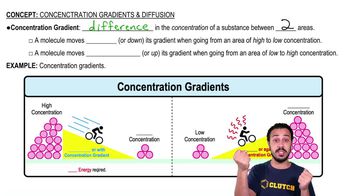
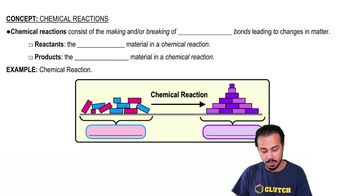
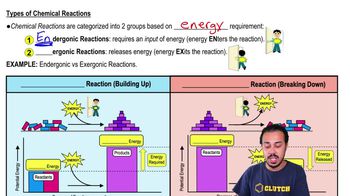
Exergonic reactions are chemical processes that release energy, often in the form of heat or light. In biological systems, these reactions are crucial for driving cellular processes, including ATP synthesis. The energy released during these reactions can be harnessed to perform work, such as the active transport of molecules across membranes.
A proton gradient refers to the difference in proton concentration across a membrane, which creates potential energy. In mitochondria, this gradient is established by the electron transport chain during cellular respiration. The energy stored in this gradient is used by ATP synthase to produce ATP, making it a vital component of energy metabolism.
Coupled reactions involve linking an exergonic reaction with an endergonic reaction, allowing the energy released from the former to drive the latter. This is essential in cellular metabolism, where the energy from ATP hydrolysis (an exergonic process) is used to power various endergonic processes, such as biosynthesis and muscle contraction.