Skip to main content
Anatomy & Physiology
Il mio corso
Impara
Preparazione agli esami
AI Tutor
Guide di studio
Soluzioni per libri di testo
Flashcard
Esplora
Prova l'app
Il mio corso
Impara
Preparazione agli esami
AI Tutor
Guide di studio
Soluzioni per libri di testo
Flashcard
Esplora
Prova l'app
Indietro
Anatomy & Physiology Key Concepts
Puoi toccare per girare la carta.
Difference between veins and arteries regarding valves
Puoi toccare per girare la carta.
👆
Difference between veins and arteries regarding valves
Veins
have valves to prevent backflow;
arteries
do not have valves.
Avanzamenti del tracciato
I pulsanti di controllo sono stati cambiati in modalità "navigazione".
1/29
Video consigliati
3:06
What is Anatomy & Physiology? Example 3
33971
views
833
rank
8
comments
01:58
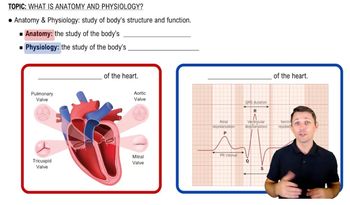
What is Anatomy & Physiology? Example 2
45671
views
2551
rank
03:04
The Difference Between Anatomy and Physiology
88106
views
4329
rank
11
comments
Termini in questo insieme (29)
Nascondere definizioni
Difference between veins and arteries regarding valves
Veins
have valves to prevent backflow;
arteries
do not have valves.
Effect of decreased peripheral resistance on blood flow and hematocrit
↓ Peripheral resistance → ↑ blood flow → ↓ hematocrit concentration effect.
Relationship between hematocrit and blood viscosity
↓ Hematocrit leads to ↓ blood viscosity, which decreases resistance to blood flow.
Steps of RAAS in blood pressure regulation
1) ↓ BP → 2) Kidneys release renin → 3) Angiotensin II forms → 4) Vasoconstriction + aldosterone release → 5) Na⁺ and water reabsorption → 6) ↑ blood volume → ↑ BP.
Role of ADH in blood pressure regulation
ADH
increases water reabsorption in kidneys, resulting in ↓ urine output and ↑ blood volume.
Frank-Starling Law of the heart
↑ End-diastolic volume (EDV) causes ↑ stroke volume; more filling results in a stronger contraction.
Sympathetic nervous system response to blood loss
Blood loss ↓ blood volume → sympathetic activation → ↑ heart rate and ↑ cardiac output.
Concept of afterload in cardiac function
↑ Aortic pressure (e.g., atherosclerosis) requires ↑ ventricular pressure to open the aortic valve.
Effect of skeletal muscle contraction on venous return during exercise
Muscle contraction compresses veins → ↑ venous return → ↑ preload on the heart.
Pathway of cardiac electrical conduction system
SA node → AV node → Bundle of His → Purkinje fibers.
ECG wave components and their meanings
P wave = atrial depolarization; QRS complex = ventricular depolarization.
Formula for cardiac output (CO)
CO = HR × SV (heart rate times stroke volume).
Difference between endocrine and exocrine glands
Endocrine glands
secrete hormones into the bloodstream;
exocrine glands
secrete onto body surfaces or into ducts.
Example of lipid-soluble hormone
Steroid hormones like
cortisol
are lipid-soluble.
Function of calcitonin hormone
Calcitonin lowers blood calcium levels.
Normal blood pH range
Normal blood pH is between 7.35 and 7.45.
Location of platelets after blood centrifugation
Platelets settle into the buffy coat layer, not in plasma.
Functional layer of the endometrium during menstruation
The functional layer is shed during menstruation and regenerated by the basal layer.
Optimal temperature for sperm production
Sperm production is optimal below core body temperature.
Role of the epididymis in male reproduction
Epididymis stores and matures sperm.
Chromosome number in human gametes
Human gametes are haploid with 23 chromosomes.
Site of glucose and amino acid reabsorption in the nephron
Proximal convoluted tubule (PCT) reabsorbs ~100% of glucose and amino acids.
Main site of nutrient absorption in the small intestine
Most nutrient absorption occurs in the jejunum and ileum.
Function of the epiglottis
Epiglottis prevents food from entering the trachea during swallowing.
Cause of edema related to capillary pressures
Edema results from ↑ hydrostatic pressure or ↓ oncotic (protein) pressure in capillaries.
Role of atrial natriuretic peptide (ANP)
ANP causes vasodilation and decreases blood pressure.
Difference between intrinsic and extrinsic blood flow control
Intrinsic (myogenic) control is local; extrinsic control involves nervous and endocrine systems.
Surface area adaptations in the small intestine
Circular folds, villi, and microvilli increase surface area for absorption.
Phases of respiration at rest
Inspiration is active; expiration is passive.
 IndietroIndietro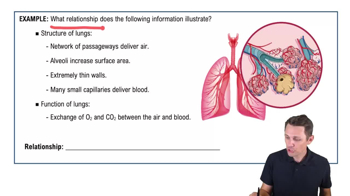
 3:06
3:06