Skip to main content
Anatomy & Physiology
Il mio corso
Impara
Preparazione agli esami
AI Tutor
Guide di studio
Soluzioni per libri di testo
Flashcard
Esplora
Prova l'app
Il mio corso
Impara
Preparazione agli esami
AI Tutor
Guide di studio
Soluzioni per libri di testo
Flashcard
Esplora
Prova l'app
Indietro
Appendicular Skeleton Anatomy & Physiology
Puoi toccare per girare la carta.
What bones make up the appendicular skeleton?
Puoi toccare per girare la carta.
👆
What bones make up the appendicular skeleton?
The appendicular skeleton includes the bones of the pectoral (shoulder) and pelvic (hip) girdles and the upper and lower limbs.
Avanzamenti del tracciato
I pulsanti di controllo sono stati cambiati in modalità "navigazione".
1/20
Video consigliati
02:05
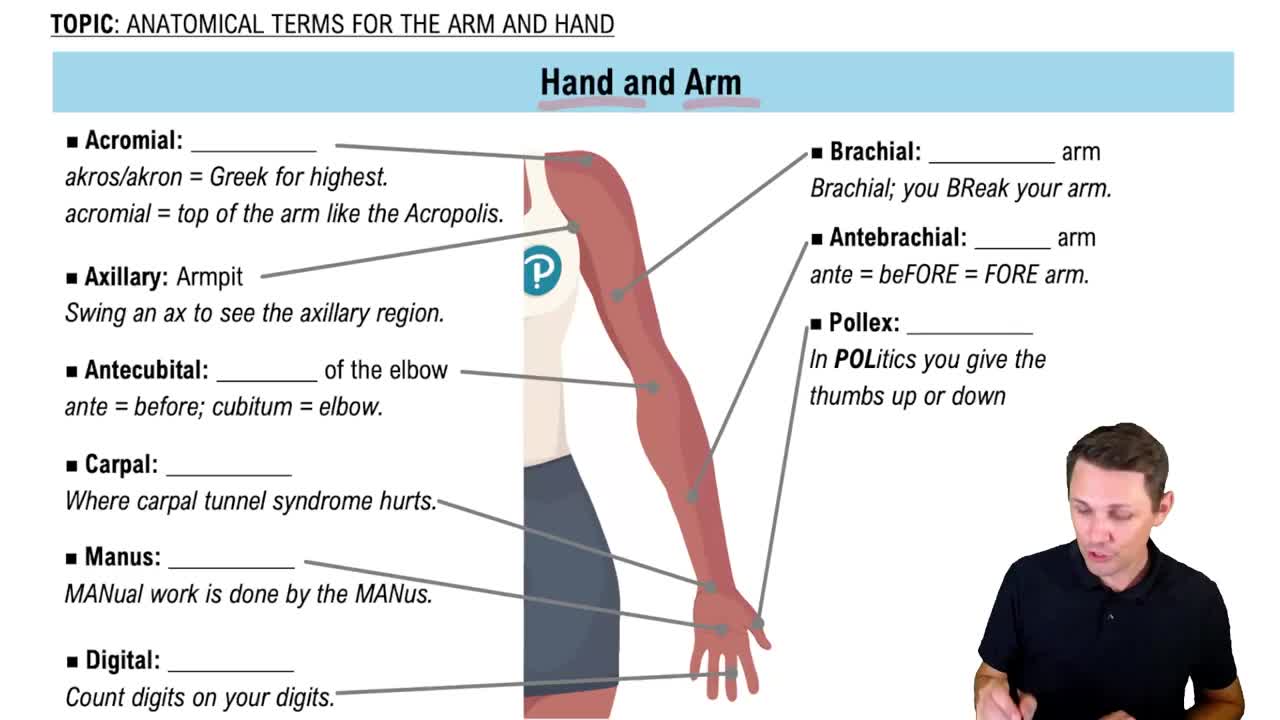
Anatomical Terms for the Arm and Hand Example 1
6982
views
163
rank
03:17
The Arm and Hand
9862
views
206
rank
3
comments
Termini in questo insieme (20)
Nascondere definizioni
What bones make up the appendicular skeleton?
The appendicular skeleton includes the bones of the pectoral (shoulder) and pelvic (hip) girdles and the upper and lower limbs.
What bones form the pectoral girdle?
The pectoral girdle consists of the clavicle and scapula.
Name the bones of the upper arm and forearm.
The upper arm contains the humerus; the forearm contains the radius (lateral) and ulna (medial).
Which forearm bone is on the thumb side?
The radius is on the thumb side (lateral side) of the forearm.
Which forearm bone is on the pinky side?
The ulna is on the pinky side (medial side) of the forearm.
How are the radius and ulna positioned when the palm faces forward?
When the palm faces forward, the radius and ulna are parallel.
What type of bone is the humerus?
The humerus is classified as a long bone.
How many carpals, metacarpals, and phalanges are in the hand?
The hand has 8 carpals, 5 metacarpals, and 14 phalanges.
Name the proximal row of carpal bones from lateral to medial.
The proximal carpal row includes the scaphoid, lunate, triquetrum, and pisiform.
Name the distal row of carpal bones from lateral to medial.
The distal carpal row includes the trapezium, trapezoid, capitate, and hamate.
What bones form the pelvic girdle?
The pelvic girdle is formed by the coxal (hip) bones, each made of fused ilium, ischium, and pubis.
What bones make up the thigh and leg?
The thigh contains the femur; the leg contains the tibia (medial) and fibula (lateral).
Which leg bone is the main weight-bearing bone?
The tibia is the main weight-bearing bone of the leg.
How many tarsals, metatarsals, and phalanges are in the foot?
The foot has 7 tarsals, 5 metatarsals, and 14 phalanges.
Name the three fused bones forming each hip bone.
Each hip bone is formed by the ilium (superior), ischium (posteroinferior), and pubis (anteroinferior).
What is the function of the interosseous membrane in the forearm?
The interosseous membrane connects the radius and ulna, providing stability and allowing muscle attachment.
What mnemonic helps remember the carpal bones?
Some Lovers Try Positions That They Can't Handle (Scaphoid, Lunate, Triquetrum, Pisiform, Trapezium, Trapezoid, Capitate, Hamate).
What are the key functions of the appendicular skeleton?
It allows movement (levers), protects vital organs, supports and stabilizes the body, stores minerals, and enables hematopoiesis.
What is the anatomical position of the scapula relative to the thorax?
The scapula is a flat, triangular bone that slides over the thoracic wall.
What is the significance of the glenoid cavity?
The glenoid cavity is the socket of the shoulder joint where the humerus head articulates.
 IndietroIndietro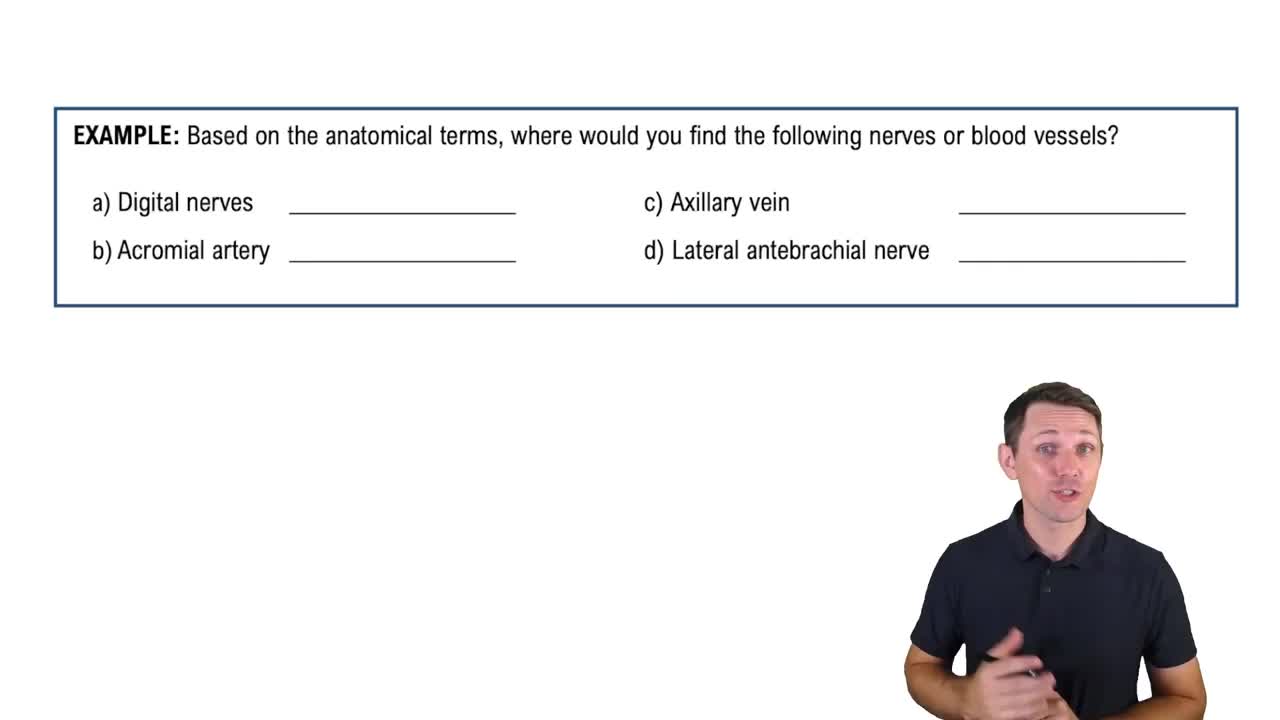
 02:05
02:05