Ch. 2 The Chemistry of Life
Amerman- Human Anatomy & Physiology 3e
Amerman3rd EditionHuman Anatomy & PhysiologyISBN: 9780138247201, 9780138247928, 9780138201814Non è quello che usi tu?Cambia libro di testo
Capitolo 2, Problema L3B5

The drug methotrexate is used to treat several different types of cancer and diseases of the immune system. It works by inhibiting an enzyme in the cell necessary for folic acid synthesis. Without folic acid, the cell cannot make nucleotides. What, specifically, does an enzyme do in the cell? Why would inhibiting this enzyme disrupt folic acid synthesis? What effect would a disruption in folic acid synthesis have on the cell as a whole? (Hint: Think about the role that folic acid plays in the cell.) (Connects to Chapter 2)

Guida verificata passo dopo passo
1
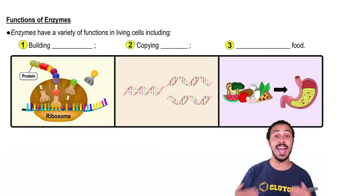
Enzymes are biological catalysts that speed up chemical reactions in the cell by lowering the activation energy required for the reaction to occur. They are highly specific to the substrates they bind to and facilitate the conversion of these substrates into products.
Methotrexate inhibits a specific enzyme called dihydrofolate reductase (DHFR), which is essential for the synthesis of tetrahydrofolate, a derivative of folic acid. Tetrahydrofolate is required for the production of nucleotides, the building blocks of DNA and RNA.
By inhibiting DHFR, methotrexate prevents the conversion of dihydrofolate into tetrahydrofolate, effectively halting the synthesis of folic acid. Without folic acid, the cell cannot produce the nucleotides necessary for DNA replication and repair.
A disruption in folic acid synthesis would impair the cell's ability to divide and replicate its DNA. This is particularly detrimental to rapidly dividing cells, such as cancer cells, which rely heavily on nucleotide synthesis for their rapid proliferation.
Overall, the inhibition of folic acid synthesis by methotrexate leads to a decrease in DNA and RNA production, ultimately causing cell cycle arrest and cell death, which is why it is effective in treating cancer and immune-related diseases.

Risposta video verificata per un problema simile:

Questa soluzione video è stata consigliata dai nostri tutor come utile per risolvere questo problema.

Concetti chiave

Ecco i concetti essenziali che devi comprendere per rispondere correttamente alla domanda.

Enzymes and Their Function

Enzymes are biological catalysts that speed up chemical reactions in cells by lowering the activation energy required for the reaction to occur. They are typically proteins that bind to specific substrates, facilitating their conversion into products. In the context of methotrexate, the enzyme inhibited is crucial for the synthesis of folic acid, which is necessary for various metabolic processes.
Video consigliato:
Percorso guidato
02:32
Functions of Enzymes

Folic Acid Synthesis

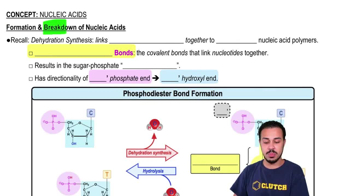
Folic acid, or vitamin B9, is essential for the synthesis of nucleotides, the building blocks of DNA and RNA. It plays a critical role in cell division and growth, particularly in rapidly dividing cells such as those in the immune system and cancerous tissues. Inhibiting the enzyme responsible for folic acid synthesis disrupts this process, leading to impaired cell proliferation and function.
Video consigliato:
Percorso guidato
04:07
Formation & Breakdown of Nucleic Acids

Impact of Disrupted Folic Acid Synthesis

A disruption in folic acid synthesis can lead to a deficiency in nucleotides, which affects DNA replication and repair. This can result in cell cycle arrest, apoptosis (programmed cell death), and impaired immune responses. In cancer treatment, this disruption is beneficial as it targets rapidly dividing cancer cells, but it can also affect normal cells, leading to side effects.
Video consigliato:
Percorso guidato
04:07
Formation & Breakdown of Nucleic Acids