Ch. 4 Histology
Amerman- Human Anatomy & Physiology 3e
Amerman3rd EditionHuman Anatomy & PhysiologyISBN: 9780138247201, 9780138247928, 9780138201814Non è quello che usi tu?Cambia libro di testo
Capitolo 4, Problema 3b

Describe the roles of the following components of the ECM:
Glycosaminoglycans

Guida verificata passo dopo passo
1
Understand that the extracellular matrix (ECM) is a complex network of macromolecules that provides structural and biochemical support to surrounding cells. Glycosaminoglycans (GAGs) are one of the key components of the ECM.
Learn that glycosaminoglycans are long, unbranched polysaccharides composed of repeating disaccharide units. These units typically consist of an amino sugar (such as N-acetylglucosamine or N-acetylgalactosamine) and a uronic acid (such as glucuronic acid or iduronic acid).
Recognize that GAGs are highly negatively charged due to the presence of sulfate and carboxyl groups. This negative charge allows them to attract water molecules, making them essential for maintaining hydration and turgidity in tissues.
Understand the functional roles of GAGs in the ECM: they contribute to the structural integrity of tissues, provide resistance to compressive forces (especially in cartilage), and regulate cell signaling by interacting with growth factors and cytokines.
Explore examples of GAGs, such as hyaluronic acid (important for joint lubrication), chondroitin sulfate (found in cartilage), and heparan sulfate (involved in cell signaling and anticoagulation). Each type of GAG has specific roles depending on its location and molecular structure.

Risposta video verificata per un problema simile:

Questa soluzione video è stata consigliata dai nostri tutor come utile per risolvere questo problema.

Concetti chiave

Ecco i concetti essenziali che devi comprendere per rispondere correttamente alla domanda.

Extracellular Matrix (ECM)

The extracellular matrix (ECM) is a complex network of proteins and carbohydrates that provides structural and biochemical support to surrounding cells. It plays a crucial role in tissue and organ function, influencing cell behavior, migration, and differentiation. The ECM is composed of various components, including glycoproteins, proteoglycans, and glycosaminoglycans, which together create a dynamic environment for cellular interactions.
Video consigliato:
3:31
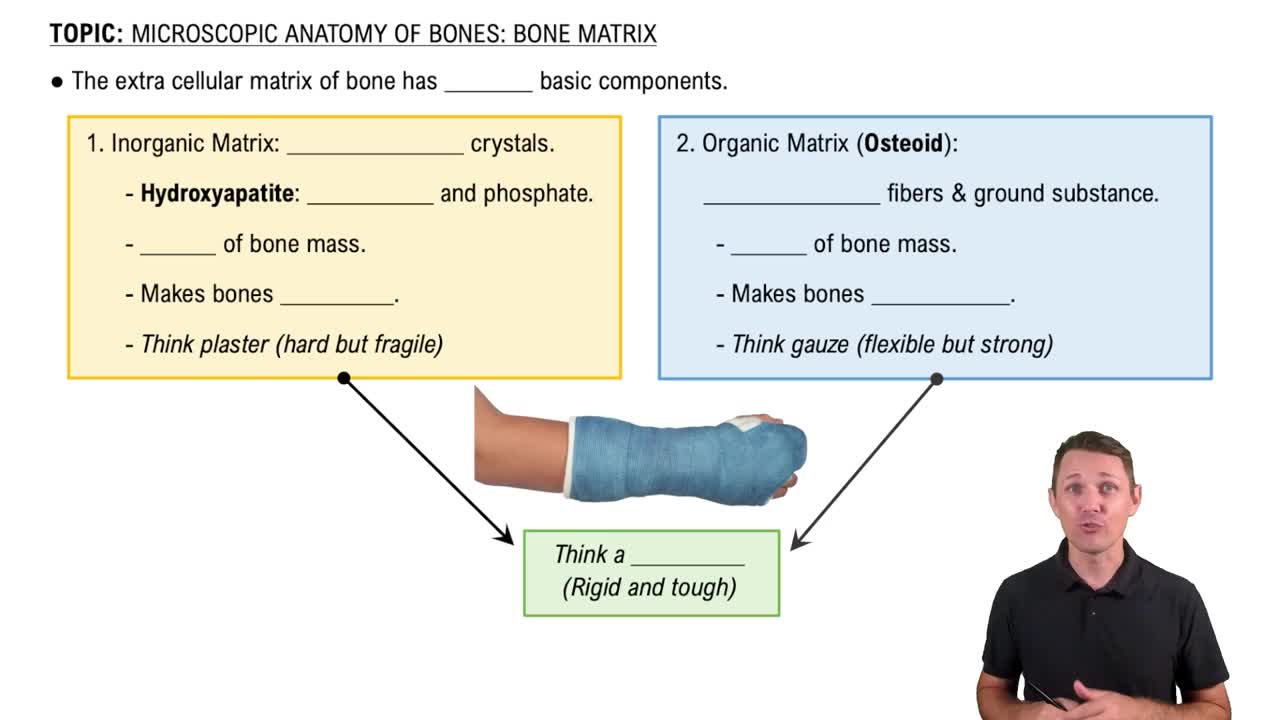
Bone Matrix

Glycosaminoglycans (GAGs)

Glycosaminoglycans (GAGs) are long, unbranched polysaccharides that are a key component of the ECM. They are negatively charged and attract water, contributing to the gel-like consistency of the matrix, which helps maintain tissue hydration and elasticity. GAGs also play a role in cell signaling and can bind to growth factors, influencing cellular processes such as proliferation and migration.

Roles of GAGs in the ECM

In the ECM, glycosaminoglycans serve multiple essential functions, including providing structural support, facilitating cell adhesion, and regulating the movement of cells and molecules. They help to create a hydrated environment that allows for nutrient diffusion and waste removal. Additionally, GAGs interact with various proteins, influencing cellular responses and contributing to tissue repair and regeneration.
Video consigliato:
08:24
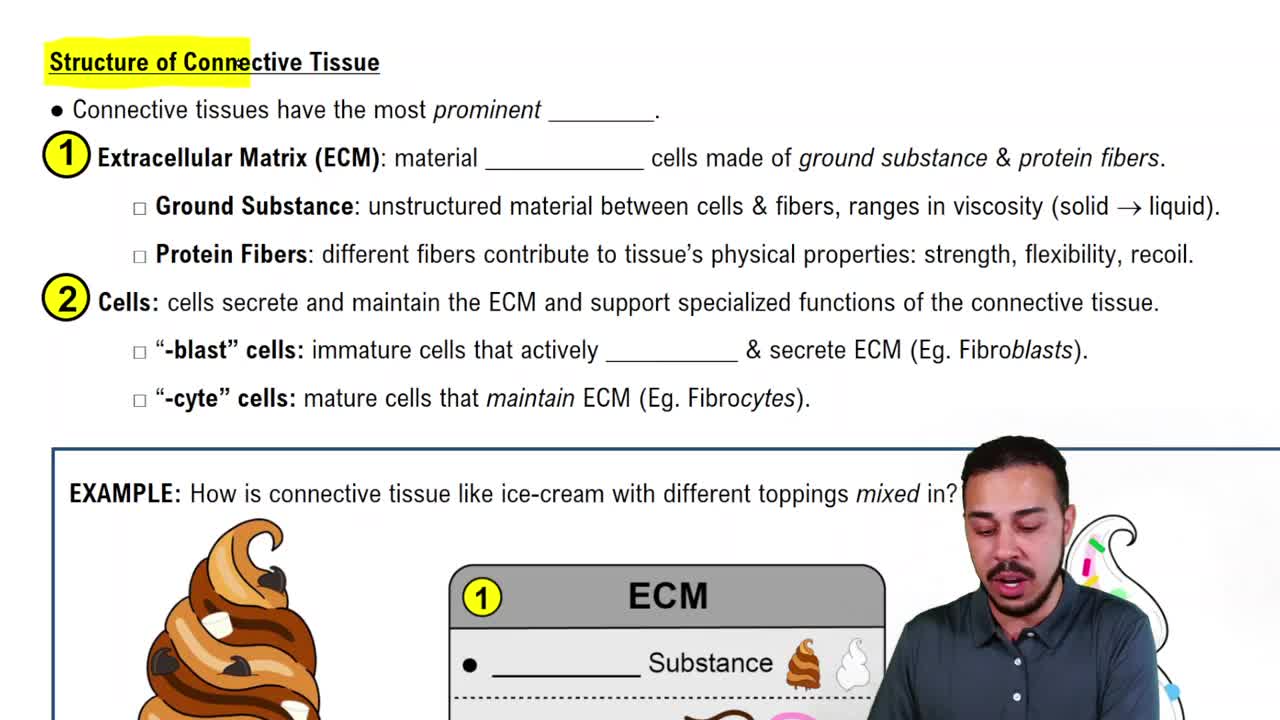
Structure of Connective Tissue