Ch. 17 Blood
Hoehn - Marieb Human Anatomy & Physiology, 12th edition
Hoehn, Haynes, Abbott12th EditionMarieb Human Anatomy & PhysiologyISBN: 9780138242732Non è quello che usi tu?Cambia libro di testo
Capitolo 17, Problema 4

The most numerous WBC is:
a. Eosinophil
b. Neutrophil
c. Monocyte
d. Lymphocyte

Guida verificata passo dopo passo
1
Step 1: Understand that WBC stands for white blood cells, which are part of the immune system and help defend the body against infections.
Step 2: Recall the main types of white blood cells: neutrophils, eosinophils, monocytes, lymphocytes, and basophils.
Step 3: Recognize that the question asks for the most numerous type of WBC in normal human blood.
Step 4: Remember that neutrophils typically make up the largest percentage of white blood cells, usually around 50-70% of the total WBC count.
Step 5: Compare the options given (eosinophil, neutrophil, monocyte, lymphocyte) and identify neutrophils as the most abundant type.

Risposta video verificata per un problema simile:

Questa soluzione video è stata consigliata dai nostri tutor come utile per risolvere questo problema.
Durata del video:
5m

Concetti chiave

Ecco i concetti essenziali che devi comprendere per rispondere correttamente alla domanda.

White Blood Cells (WBCs)

White blood cells are immune cells that protect the body against infections and foreign substances. They are classified into different types based on their structure and function, including neutrophils, eosinophils, monocytes, and lymphocytes.
Video consigliato:
Percorso guidato
7:49
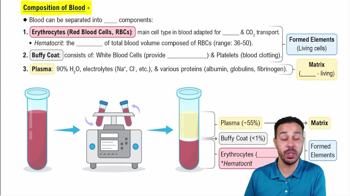
Composition of Blood

Neutrophils

Neutrophils are the most abundant type of white blood cells in the bloodstream. They play a key role in the innate immune response by quickly responding to infections, especially bacterial, through phagocytosis and releasing enzymes to destroy pathogens.
Video consigliato:

Differential WBC Count

A differential WBC count measures the percentage of each type of white blood cell in the blood. It helps identify which WBC is most numerous and can indicate the body's immune status or presence of disease.
Video consigliato:
Percorso guidato
4:50
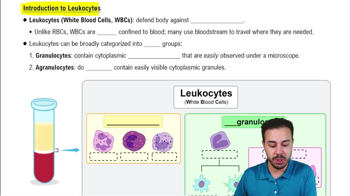
Introduction to Leukocytes