Ch. 18 The Cardiovascular System: The Heart
Hoehn - Marieb Human Anatomy & Physiology, 12th edition
Hoehn, Haynes, Abbott12th EditionMarieb Human Anatomy & PhysiologyISBN: 9780138242732Non è quello che usi tu?Cambia libro di testo
Capitolo 18, Problema 21

(a) Describe the common function of the foramen ovale and the ductus arteriosus in a fetus.
(b) What problems result if these shunts remain patent (open) after birth?

Guida verificata passo dopo passo
1
(a) Begin by understanding the fetal circulation system, which includes special structures like the foramen ovale and the ductus arteriosus that allow blood to bypass the lungs, which are not yet functional before birth.
Explain that the foramen ovale is an opening between the right and left atria of the fetal heart, allowing blood to flow directly from the right atrium to the left atrium, bypassing the non-functioning fetal lungs.
Describe the ductus arteriosus as a vessel connecting the pulmonary artery to the aorta, which also helps divert blood away from the lungs by allowing it to flow directly into systemic circulation.
(b) Discuss the consequences if these shunts remain open (patent) after birth, when the lungs are supposed to take over oxygen exchange. This can cause abnormal blood flow patterns, leading to inefficient oxygenation and increased workload on the heart.
Specifically, explain that a patent foramen ovale or ductus arteriosus can cause mixing of oxygenated and deoxygenated blood, potentially resulting in symptoms such as cyanosis, heart murmur, or heart failure, depending on the severity.

Concetti chiave

Ecco i concetti essenziali che devi comprendere per rispondere correttamente alla domanda.

Fetal Circulatory Shunts

The foramen ovale and ductus arteriosus are fetal shunts that direct blood flow to bypass the non-functioning fetal lungs. The foramen ovale allows blood to flow from the right atrium to the left atrium, while the ductus arteriosus connects the pulmonary artery to the aorta, ensuring oxygenated blood reaches systemic circulation.
Video consigliato:

Closure of Fetal Shunts After Birth

After birth, the lungs expand and begin oxygen exchange, causing the foramen ovale and ductus arteriosus to close. This closure redirects blood flow through the lungs for oxygenation. Proper closure is essential for normal postnatal circulation and oxygen delivery.
Video consigliato:
2:19
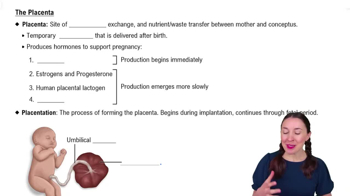
The Placenta

Consequences of Patent Foramen Ovale and Ductus Arteriosus

If the foramen ovale or ductus arteriosus remain open (patent) after birth, abnormal blood flow occurs, leading to mixing of oxygenated and deoxygenated blood. This can cause complications such as hypoxemia, heart strain, and increased risk of infections or heart failure, requiring medical intervention.
Video consigliato:
2:25
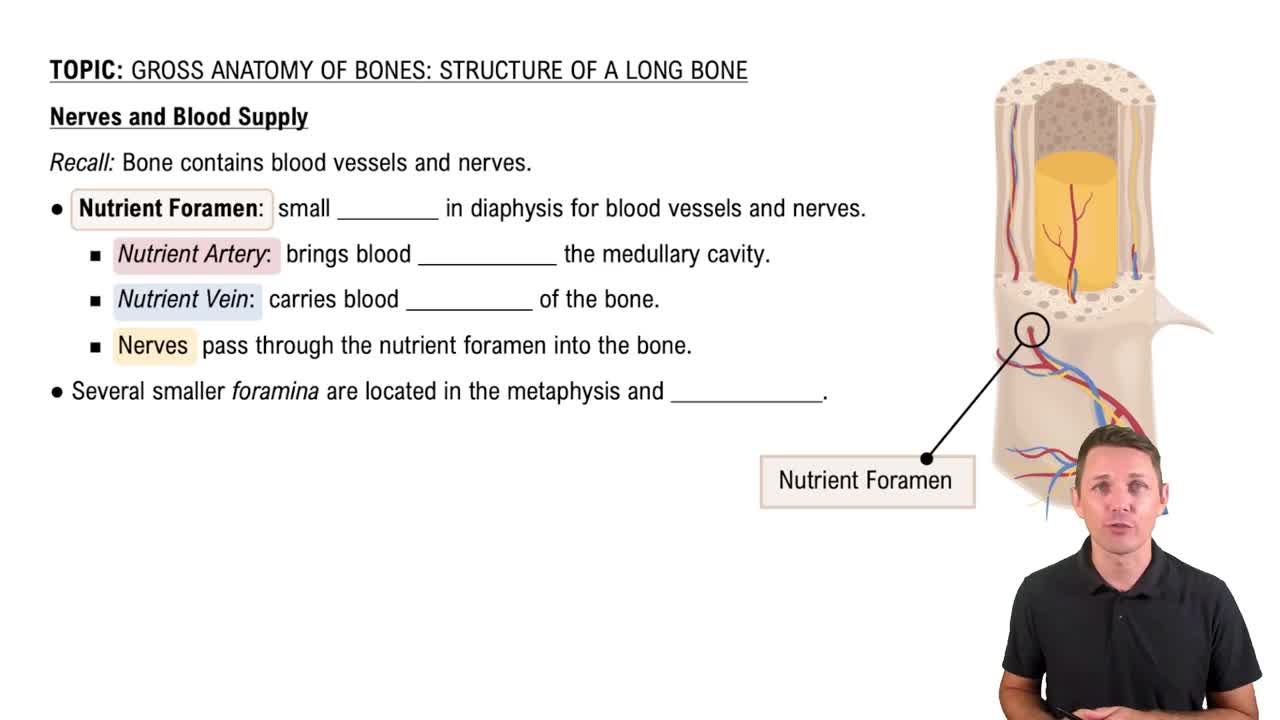
Nerves and Blood Supply
Pratica correlata
Domanda del libro di testo

Describe how heart contraction and relaxation influence coronary blood flow

Name the major branches of the coronary arteries, and note the heart regions served by each

884
views

Domanda del libro di testo

Discuss how the Frank-Starling law of the heart helps to explain the influence of venous return on stroke volume.

977
views
Domanda del libro di testo

Name the elements of the intrinsic conduction system of the heart in order, beginning with the pacemaker

What is the important function of this conduction system?

1602
views
Domanda del libro di testo

You have been called upon to demonstrate the technique for listening to valve sounds.

Explain where you would position your stethoscope to auscultate.

(1) the aortic valve of a patient with severe aortic valve insufficiency and

(2) a stenotic mitral valve.

During which period(s) would you hear these abnormal valve sounds most clearly? (During atrial diastole, ventricular systole, ventricular diastole, or atrial systole?)

What cues would you use to differentiate between an insufficient and a stenotic valve?

974
views
Domanda del libro di testo

Florita Santos, a middle-aged woman, is admitted to the coronary care unit with a diagnosis of left ventricular failure resulting from a myocardial infarction. Her history indicates that she awoke in the middle of the night with severe chest pain. Her skin is pale and cold, and moist sounds are heard over the lower regions of both lungs. Explain how failure of the left ventricle can cause these signs and symptoms.

1170
views