Ch. 23 The Digestive System
Hoehn - Marieb Human Anatomy & Physiology, 12th edition
Hoehn, Haynes, Abbott12th EditionMarieb Human Anatomy & PhysiologyISBN: 9780138242732Non è quello che usi tu?Cambia libro di testo
Capitolo 23, Problema 3

The lamina propria forms part of the:
a. Muscularis externa
b. Submucosa
c. Serosa
d. Mucosa

Guida verificata passo dopo passo
1
Step 1: Understand the layers of the gastrointestinal (GI) tract wall. The main layers from inside to outside are: mucosa, submucosa, muscularis externa, and serosa (or adventitia).
Step 2: Recall that the mucosa itself is composed of three sublayers: the epithelium (innermost lining), the lamina propria (a layer of connective tissue), and the muscularis mucosae (a thin layer of smooth muscle).
Step 3: Identify the lamina propria as the connective tissue layer that supports the epithelium and contains blood vessels, lymphatics, and immune cells.
Step 4: Recognize that the lamina propria is part of the mucosa layer, not the submucosa, muscularis externa, or serosa.
Step 5: Conclude that the correct answer is the mucosa, since the lamina propria forms part of this innermost layer of the GI tract.

Risposta video verificata per un problema simile:

Questa soluzione video è stata consigliata dai nostri tutor come utile per risolvere questo problema.
Durata del video:
1m

Concetti chiave

Ecco i concetti essenziali che devi comprendere per rispondere correttamente alla domanda.

Lamina Propria

The lamina propria is a thin layer of loose connective tissue found beneath the epithelium of mucous membranes. It contains blood vessels, nerves, and immune cells, providing support and nourishment to the epithelium. It plays a key role in immune defense and tissue repair.
Video consigliato:
06:01
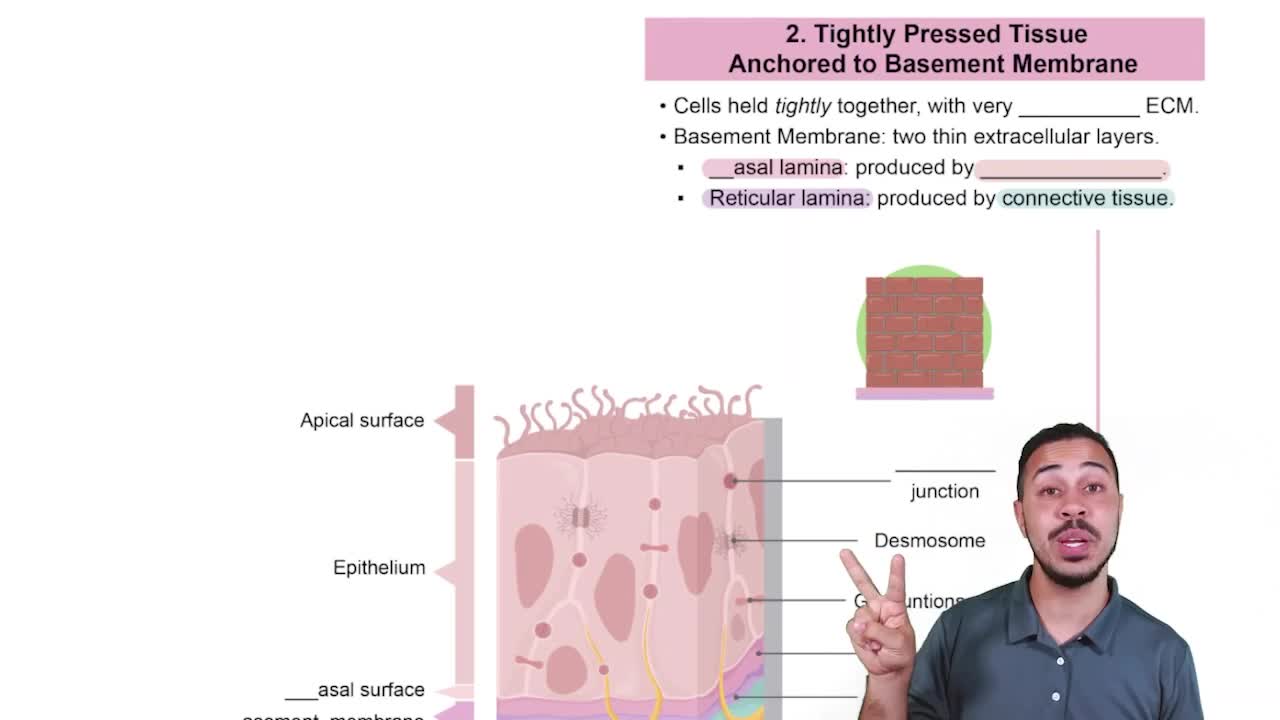
Characteristic 2: Tightly Pressed Tissue Anchored to Basement Membrane

Mucosa Layer

The mucosa is the innermost layer of the gastrointestinal tract, consisting of the epithelium, lamina propria, and muscularis mucosae. It functions in absorption, secretion, and protection, forming the interface between the lumen and underlying tissues.
Video consigliato:
Percorso guidato
02:31
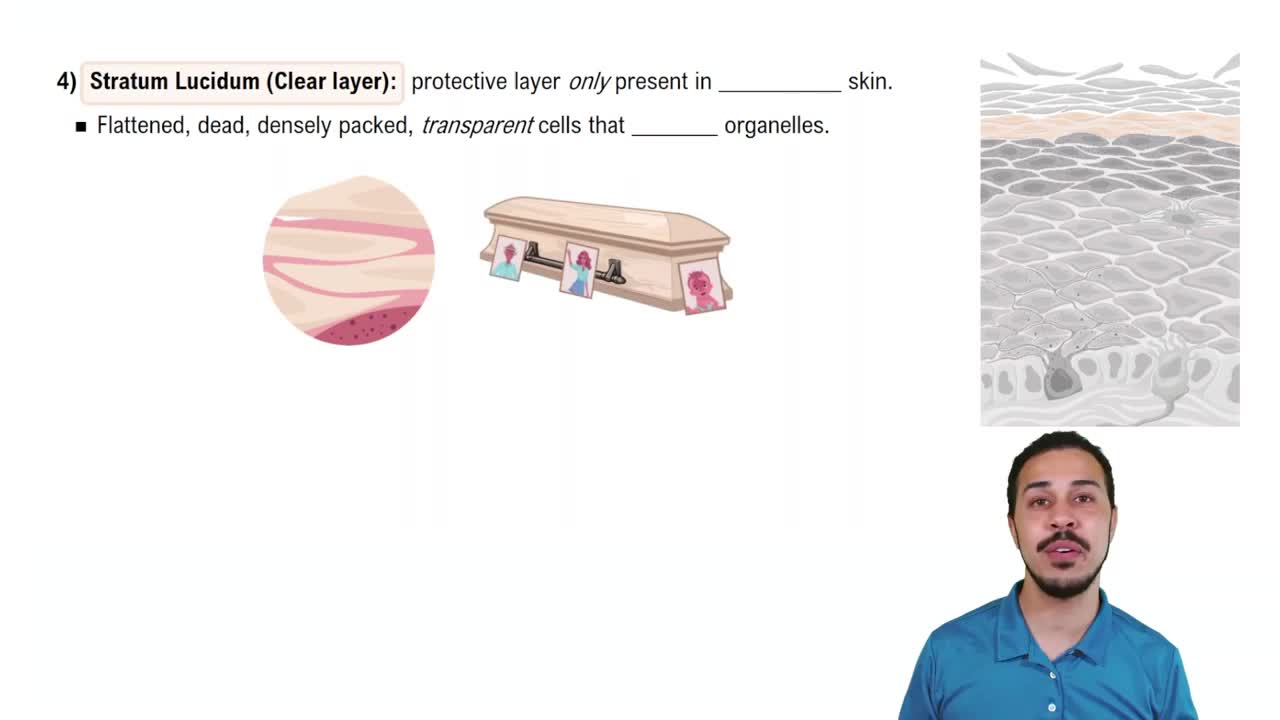
Epidermal Layers: Stratum Lucidum (Clear Layer)

Layers of the Gastrointestinal Tract

The GI tract wall is organized into four main layers: mucosa, submucosa, muscularis externa, and serosa. Each layer has distinct structures and functions, with the lamina propria specifically located within the mucosa layer.
Video consigliato:
Percorso guidato
02:31
Epidermal Layers: Stratum Lucidum (Clear Layer)