Distinguish between the role of HDLs and that of LDLs.
Ch. 24 Nutrition, Metabolism, and Energy Balance
Hoehn, Haynes, Abbott12th EditionMarieb Human Anatomy & PhysiologyISBN: 9780138242732Non è quello che usi tu?Cambia libro di testo
Tutti i libri di testo
Hoehn, Haynes, Abbott 12th Edition
Ch. 24 Nutrition, Metabolism, and Energy Balance
Problema 16
Hoehn, Haynes, Abbott 12th Edition
Ch. 24 Nutrition, Metabolism, and Energy Balance
Problema 16Capitolo 24, Problema 16
Define glycogenesis, glycogenolysis, gluconeogenesis, and lipogenesis. What is (are) likely to be occurring:
a. Shortly after a carbohydrate-rich meal
b. Just before waking up in the morning?
Guida verificata passo dopo passo1
Step 1: Define glycogenesis. Glycogenesis is the process of synthesizing glycogen from glucose molecules. It occurs primarily in the liver and skeletal muscles when there is an excess of glucose in the bloodstream.
Step 2: Define glycogenolysis. Glycogenolysis is the breakdown of glycogen into glucose molecules. This process occurs in the liver and muscles to release glucose into the bloodstream when energy is needed.
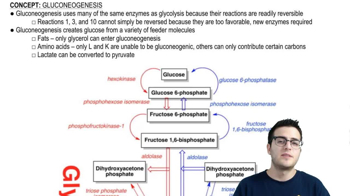
Step 3: Define gluconeogenesis. Gluconeogenesis is the metabolic pathway that generates glucose from non-carbohydrate sources, such as amino acids and glycerol. This process occurs primarily in the liver during periods of fasting or low carbohydrate intake.
Step 4: Define lipogenesis. Lipogenesis is the process of synthesizing fatty acids and triglycerides from acetyl-CoA and other substrates. This occurs when there is an excess of energy, particularly from carbohydrates, and is stored in adipose tissue.
Step 5: Analyze the scenarios: a) Shortly after a carbohydrate-rich meal, glycogenesis and lipogenesis are likely to occur as the body stores excess glucose and energy. b) Just before waking up in the morning, glycogenolysis and gluconeogenesis are likely to occur to maintain blood glucose levels during fasting.

Risposta video verificata per un problema simile:
Questa soluzione video è stata consigliata dai nostri tutor come utile per risolvere questo problema.
Durata del video:
1mConcetti chiave
Ecco i concetti essenziali che devi comprendere per rispondere correttamente alla domanda.
Glycogenesis
Glycogenesis is the metabolic process of converting glucose into glycogen for storage, primarily in the liver and muscle tissues. This process is stimulated by insulin, especially after carbohydrate-rich meals, allowing the body to store excess glucose for future energy needs.
Glycogenolysis
Glycogenolysis is the breakdown of glycogen back into glucose, which occurs when the body needs energy, such as between meals or during physical activity. This process is regulated by hormones like glucagon and epinephrine, ensuring that glucose is available for energy when needed.
Gluconeogenesis and Lipogenesis
Gluconeogenesis is the synthesis of glucose from non-carbohydrate sources, such as amino acids and glycerol, primarily occurring in the liver. Lipogenesis is the process of converting excess carbohydrates and proteins into fatty acids for fat storage. Both processes are crucial for maintaining blood glucose levels and energy balance, especially during fasting states.
Video consigliato:
Percorso guidato
Gluconeogenesis 1
Pratica correlata
Domanda del libro di testo
97
views
Domanda del libro di testo
A person has been on a hunger strike for seven days. Compared to normal, he has:
a. Increased release of fatty acids from adipose tissue and ketosis
b. Elevated glucose concentration in the blood
c. Increased plasma insulin concentration
d. Increased glycogen synthase (enzyme) activity in the liver.
124
views
Domanda del libro di testo
Describe the site, major events, and outcomes of glycolysis.
127
views
Domanda del libro di testo
List some factors that influence plasma cholesterol levels. Also list the sources and fates of cholesterol in the body.
1181
views
Domanda del libro di testo
What is the harmful result when excessive amounts of fats are burned for energy? Name two conditions that might lead to this result.
95
views
Domanda del libro di testo
What is cellular respiration? What is the common role of FAD and NAD⁺ in cellular respiration?
100
views