Describe the effect of aging on the special sense organs.
Guida verificata passo dopo passo
1
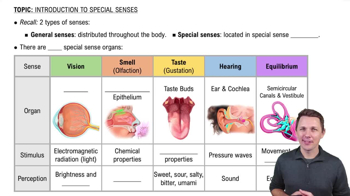
Step 1: Identify the special sense organs involved, which include the eyes (vision), ears (hearing and balance), tongue (taste), nose (smell), and skin (touch).
Step 2: Explain how aging affects the eyes, such as decreased lens elasticity leading to presbyopia, reduced pupil size affecting light intake, and possible degeneration of the retina impacting vision clarity.
Step 3: Describe the impact of aging on the ears, including the loss of hair cells in the cochlea causing presbycusis (age-related hearing loss) and changes in the vestibular system that may affect balance.
Step 4: Discuss changes in the tongue and nose, such as a reduction in the number and sensitivity of taste buds and olfactory receptors, leading to diminished taste and smell sensations.
Step 5: Mention the decline in tactile sensitivity due to reduced receptor density and slower nerve conduction, which affects the sense of touch in aging individuals.
Concetti chiave
Ecco i concetti essenziali che devi comprendere per rispondere correttamente alla domanda.
Aging and Sensory Decline
Aging leads to gradual deterioration in the function of special sense organs, causing reduced sensitivity and slower response times. This decline affects vision, hearing, taste, smell, and balance, impacting daily activities and quality of life.
With age, structural changes occur in organs like the eyes (e.g., lens stiffening), ears (e.g., hair cell loss), and olfactory epithelium (e.g., receptor cell reduction). These changes impair the organs' ability to detect and transmit sensory information accurately.
The functional impact includes presbyopia (difficulty focusing on close objects), presbycusis (age-related hearing loss), diminished taste and smell sensitivity, and balance issues. These effects can lead to safety risks and decreased social interaction.


 Guida verificata passo dopo passo
 2:47
2:47