Ch. 17 Blood
Marieb - Human Anatomy & Physiology 11th Edition
Marieb, Hoehn11th EditionHuman Anatomy & PhysiologyISBN: 9780136874034Non è quello che usi tu?Cambia libro di testo
Capitolo 17, Problema 6

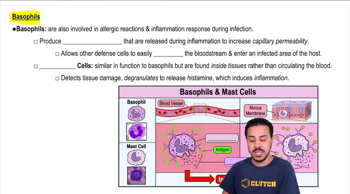
The white blood cell that releases histamine and other inflammatory chemicals is:
a. Basophil
b. Neutrophil
c. Monocyte
d. Eosinophil

Guida verificata passo dopo passo
1
Step 1: Understand the role of different white blood cells (WBCs) in the immune response. Each type of WBC has a specific function in defending the body against pathogens or in inflammatory processes.
Step 2: Recall that histamine is a chemical involved in inflammation and allergic reactions, causing blood vessels to dilate and become more permeable.
Step 3: Identify which WBC is known for releasing histamine and other inflammatory chemicals. This WBC plays a key role in initiating inflammation and allergic responses.
Step 4: Review the functions of the options: Basophils release histamine; Neutrophils are primarily phagocytic cells that engulf pathogens; Monocytes differentiate into macrophages and dendritic cells; Eosinophils combat parasitic infections and modulate allergic responses.
Step 5: Conclude that the white blood cell responsible for releasing histamine and other inflammatory chemicals is the Basophil.

Risposta video verificata per un problema simile:

Questa soluzione video è stata consigliata dai nostri tutor come utile per risolvere questo problema.
Durata del video:
4m

Concetti chiave

Ecco i concetti essenziali che devi comprendere per rispondere correttamente alla domanda.

Basophils

Basophils are a type of white blood cell involved in immune responses, particularly allergic reactions. They release histamine and other chemicals that cause inflammation, helping to defend against pathogens and trigger symptoms like swelling and redness.
Video consigliato:

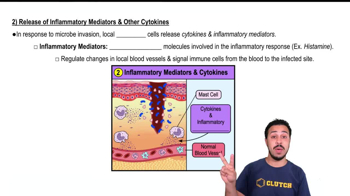
Histamine and Inflammatory Chemicals

Histamine is a chemical released by certain immune cells that increases blood vessel permeability, leading to inflammation. This process helps isolate and eliminate pathogens but also causes common allergy symptoms such as itching and swelling.
Video consigliato:
Percorso guidato
2:15
Step 2: Release of Inflammatory Mediators & Other Cytokines

Types of White Blood Cells

White blood cells (leukocytes) include various types like neutrophils, monocytes, eosinophils, and basophils, each with distinct roles. Understanding their functions is essential to identify which cells release specific chemicals during immune responses.
Video consigliato:
Percorso guidato
5:34
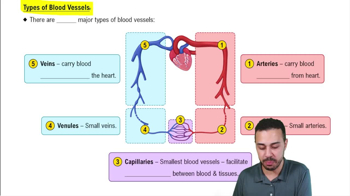
Types of Blood Vessels