Ch. 19 The Cardiovascular System: Blood Vessels
Marieb - Human Anatomy & Physiology 11th Edition
Marieb, Hoehn11th EditionHuman Anatomy & PhysiologyISBN: 9780136874034Non è quello che usi tu?Cambia libro di testo
Capitolo 19, Problema 16

How are nutrients, wastes, and respiratory gases transported to and from the blood and tissue spaces?

Guida verificata passo dopo passo
1
Understand that the transport of nutrients, wastes, and respiratory gases between blood and tissue spaces primarily occurs through the process of capillary exchange.
Recognize the three main mechanisms involved in capillary exchange: diffusion, filtration, and osmosis.
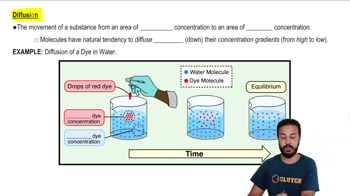
Diffusion allows substances like oxygen, carbon dioxide, glucose, and other small molecules to move from areas of higher concentration to lower concentration across the capillary walls.
Filtration occurs when blood pressure forces water and small solutes out of the capillaries into the interstitial fluid, carrying nutrients to the tissues.
Osmosis is the movement of water back into the capillaries from the interstitial fluid, driven by osmotic pressure due to plasma proteins, which helps remove wastes from tissues into the blood.

Risposta video verificata per un problema simile:

Questa soluzione video è stata consigliata dai nostri tutor come utile per risolvere questo problema.
Durata del video:
2m

Concetti chiave

Ecco i concetti essenziali che devi comprendere per rispondere correttamente alla domanda.

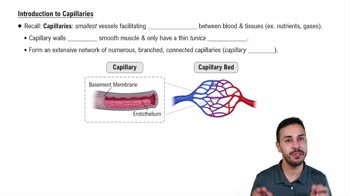
Capillary Exchange

Capillary exchange is the process by which nutrients, wastes, and gases move between blood and tissue spaces through the thin walls of capillaries. This exchange occurs via diffusion, filtration, and osmosis, allowing oxygen and nutrients to enter tissues while removing carbon dioxide and metabolic wastes.
Video consigliato:
Percorso guidato
4:36
Introduction to Capillaries

Diffusion of Respiratory Gases

Diffusion is the passive movement of respiratory gases like oxygen and carbon dioxide across cell membranes from areas of higher to lower concentration. Oxygen diffuses from blood into tissues, while carbon dioxide moves from tissues into the blood for removal via the lungs.
Video consigliato:

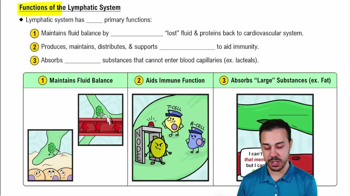
Role of the Lymphatic System

The lymphatic system helps return excess interstitial fluid, including wastes and proteins, back to the bloodstream. It maintains fluid balance in tissues and assists in removing waste products that cannot directly enter blood capillaries.
Video consigliato:
Percorso guidato
3:57
Functions of the Lymphatic System