Ch. 19 The Cardiovascular System: Blood Vessels
Marieb - Human Anatomy & Physiology 11th Edition
Marieb, Hoehn11th EditionHuman Anatomy & PhysiologyISBN: 9780136874034Non è quello che usi tu?Cambia libro di testo
Capitolo 19, Problema 5

Which of the following would not result in the dilation of the terminal arterioles and upstream arterioles in systemic capillary beds?
a. A decrease in local tissue O₂ content
b. An increase in local tissue CO₂
c. A local increase in histamine
d. A local increase in pH

Guida verificata passo dopo passo
1
Step 1: Understand the physiological context. Terminal arterioles and upstream arterioles regulate blood flow into systemic capillary beds by constricting or dilating in response to local chemical signals, which helps match blood flow to tissue metabolic needs.
Step 2: Review the effects of each option on arteriole diameter. Typically, a decrease in local tissue O₂ (hypoxia) causes vasodilation to increase blood flow and oxygen delivery.
Step 3: Consider the effect of increased local CO₂. Elevated CO₂ levels usually cause vasodilation because CO₂ accumulation indicates increased metabolic activity and the need for more blood flow.
Step 4: Analyze the role of histamine. Histamine is released during inflammation and causes vasodilation to increase blood flow and immune cell delivery to the affected area.
Step 5: Evaluate the effect of a local increase in pH. An increase in pH means the environment is more alkaline, which generally causes vasoconstriction rather than vasodilation, as it indicates lower metabolic activity or less need for increased blood flow.

Risposta video verificata per un problema simile:

Questa soluzione video è stata consigliata dai nostri tutor come utile per risolvere questo problema.
Durata del video:
2m

Concetti chiave

Ecco i concetti essenziali che devi comprendere per rispondere correttamente alla domanda.

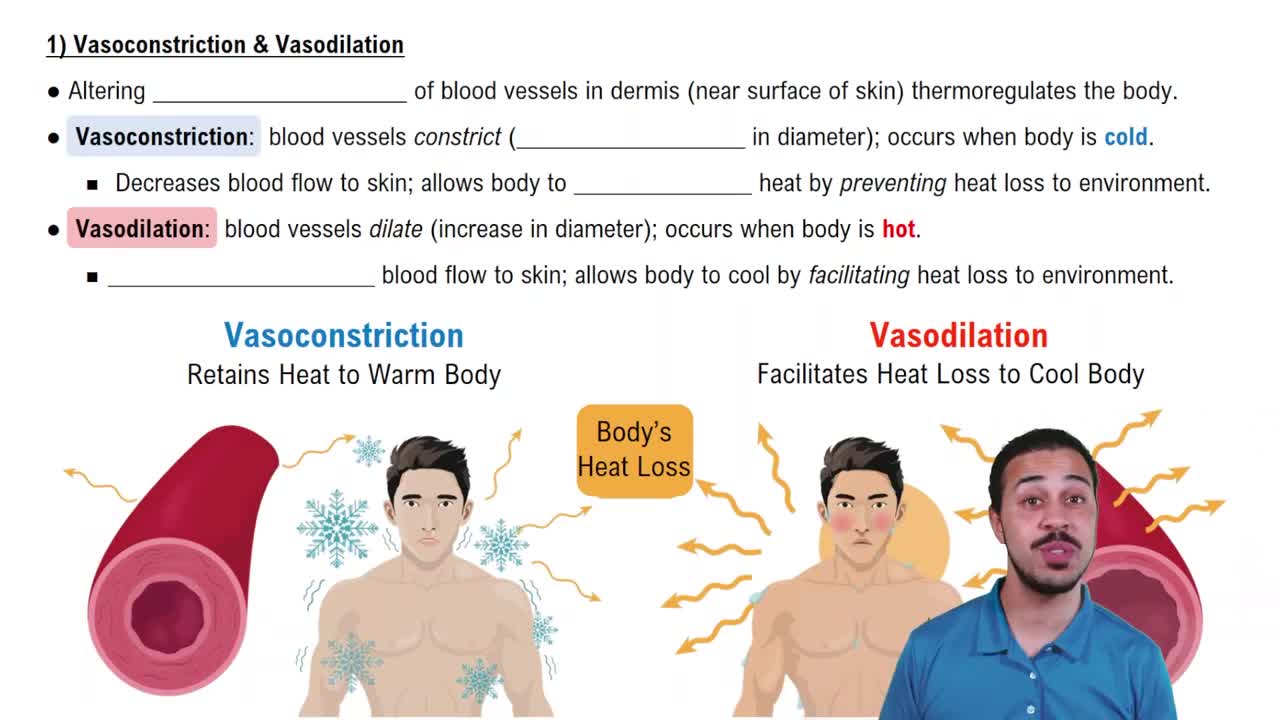
Vasodilation and Vasoconstriction Mechanisms

Vasodilation is the widening of blood vessels, often caused by factors like low oxygen, high carbon dioxide, or certain chemicals, which increase blood flow. Vasoconstriction is the narrowing of vessels, reducing blood flow. Understanding these mechanisms helps explain how arterioles respond to local tissue conditions.
Video consigliato:
Percorso guidato
05:07
Vasoconstriction & Vasodilation

Role of Local Tissue Metabolites in Blood Flow Regulation

Local metabolites such as O₂, CO₂, and pH influence arteriole diameter. Low oxygen and high carbon dioxide typically cause vasodilation to increase blood supply, while changes in pH can either dilate or constrict vessels depending on whether the environment is acidic or alkaline.
Video consigliato:
02:26
Specialized Connective Tissue: Blood Example 1

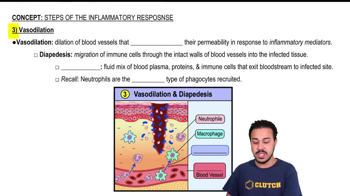
Histamine as a Vasodilator

Histamine is a chemical released during inflammation that causes vasodilation by relaxing smooth muscle in vessel walls. It increases blood flow to affected tissues, promoting immune response and healing, and is a key factor in local blood vessel regulation.
Video consigliato:
Percorso guidato
2:39
Step 3: Vasodilation