Domanda del libro di testo
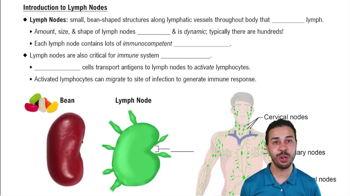
Collections of lymphoid tissue (MALT) that guard mucosal surfaces include all of the following except:
a. Appendix follicles
b. The tonsils
c. Peyer's patches
d. The thymus
1196
views

 Marieb, Hoehn 11th EditionCh. 20 The Lymphatic System and Lymphoid Organs and TissuesProblema 12
 Guida verificata passo dopo passo
 5:05
5:05
 3:32
3:32 6:59
6:59Collections of lymphoid tissue (MALT) that guard mucosal surfaces include all of the following except:
a. Appendix follicles
b. The tonsils
c. Peyer's patches
d. The thymus
Once almost a rite of childhood, tonsillectomy (surgical removal of the tonsils) is now rarely performed. Similarly, while ruptured spleens were once routinely removed, they are now conserved whenever possible. Why should these lymphoid organs be preserved when possible?
Compare the structure and functions of a lymph node to those of the spleen.
Which anatomical characteristic ensures that the flow of lymph through a lymph node is slow?
Why is this desirable?
Compare and contrast blood, interstitial fluid, and lymph.
Mrs. Jackson, a 59-year-old woman, has undergone a left radical mastectomy (removal of the left breast and left axillary lymph nodes and vessels). Her left arm is severely swollen and painful, and she is unable to raise it to more than shoulder height.
Explain her signs and symptoms.
Can she expect to have relief from these symptoms in time? How so?