
Ch. 21 The Immune System: Innate and Adaptive Body Defenses
Marieb - Human Anatomy & Physiology 11th Edition
Marieb, Hoehn11th EditionHuman Anatomy & PhysiologyISBN: 9780136874034Non è quello che usi tu?Cambia libro di testo
Capitolo 21, Problema 13

Besides acting as mechanical barriers, the skin epidermis and mucosae of the body have other attributes that contribute to their protective roles. Cite the common body locations and the importance of mucus, lysozyme, keratin, acid pH, and cilia.

Guida verificata passo dopo passo
1
Identify the common body locations where the skin epidermis and mucosae are found. The skin epidermis covers the external surface of the body, while mucosae line body cavities that are open to the exterior, such as the respiratory, digestive, urinary, and reproductive tracts.
Explain the role of mucus in these locations. Mucus is a sticky secretion produced by mucous membranes that traps pathogens and particles, preventing their entry and facilitating their removal.
Describe the function of lysozyme. Lysozyme is an enzyme found in secretions like tears, saliva, and mucus that can break down bacterial cell walls, providing a chemical defense against infection.
Discuss keratin's importance in the skin epidermis. Keratin is a tough, fibrous protein that strengthens the skin, making it waterproof and resistant to mechanical damage and microbial invasion.
Explain the protective roles of acid pH and cilia. Acid pH, such as in the stomach or on the skin surface, inhibits microbial growth, while cilia in the respiratory tract move mucus and trapped particles out of the body, helping to clear pathogens.

Risposta video verificata per un problema simile:

Questa soluzione video è stata consigliata dai nostri tutor come utile per risolvere questo problema.
Durata del video:
2m

Concetti chiave

Ecco i concetti essenziali che devi comprendere per rispondere correttamente alla domanda.

Protective Functions of Skin Epidermis and Mucosae

The skin epidermis and mucosae serve as physical barriers preventing pathogen entry. Beyond this, they produce substances like mucus and lysozyme, maintain acidic pH, and have structural features such as keratin and cilia that enhance defense by trapping, neutralizing, or removing microbes.
Video consigliato:
Percorso guidato
02:10
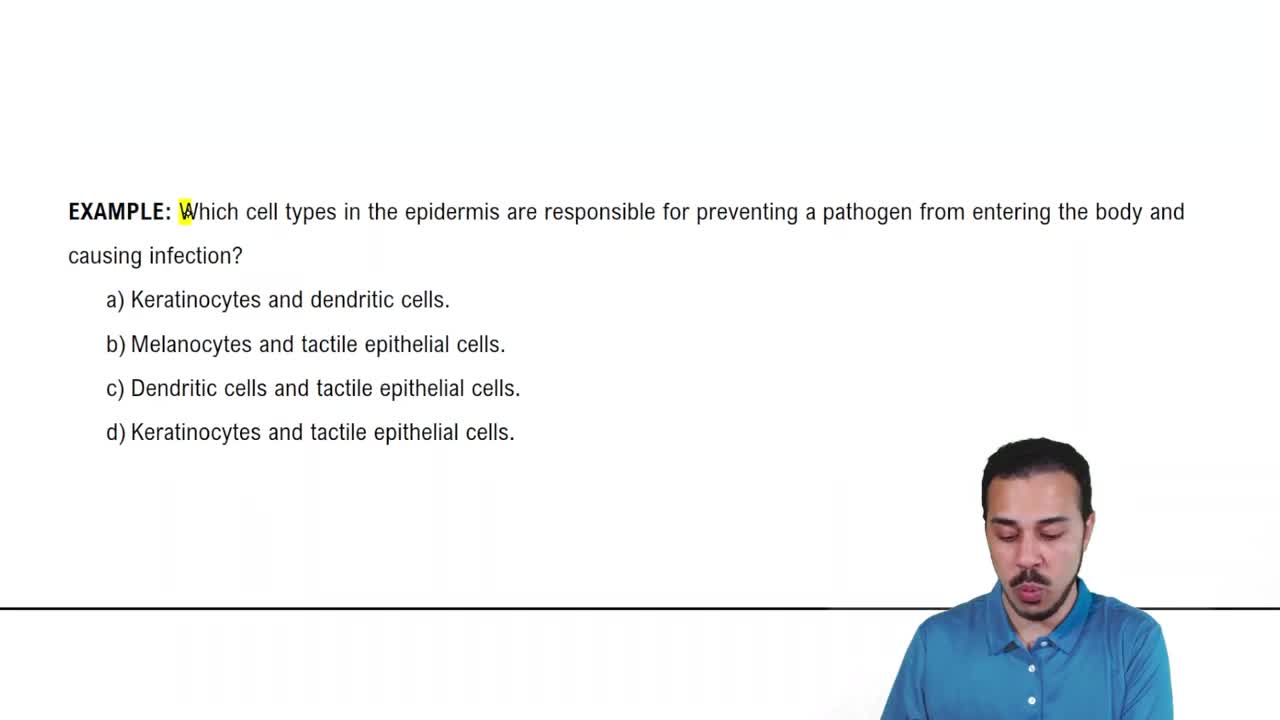
The Epidermis: Cells Example 2

Role of Mucus, Lysozyme, and Acidic pH

Mucus traps pathogens and particles, facilitating their removal. Lysozyme is an enzyme in secretions that breaks down bacterial cell walls, killing bacteria. Acidic pH, found in areas like the stomach and skin, inhibits microbial growth by creating an unfavorable environment.
Video consigliato:

Importance of Keratin and Cilia in Protection

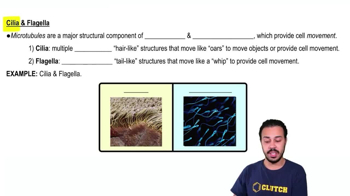
Keratin is a tough, fibrous protein in the skin and some mucosae that strengthens the barrier against physical and microbial damage. Cilia are hair-like structures in respiratory mucosa that move rhythmically to sweep mucus and trapped pathogens out, preventing infection.
Video consigliato:
Percorso guidato
03:14
Cilia & Flagella