Ch. 23 The Digestive System
Marieb - Human Anatomy & Physiology 11th Edition
Marieb, Hoehn11th EditionHuman Anatomy & PhysiologyISBN: 9780136874034Non è quello che usi tu?Cambia libro di testo
Capitolo 23, Problema 13

Someone has eaten a meal of buttered toast, cream, and eggs. Which of the following would you expect to happen?
a. Compared to the period shortly after the meal, gastric motility and secretion of HCl decrease when the food reaches the duodenum
b. Gastric motility increases even as the person is chewing the food (before swallowing)
c. Fat will be emulsified in the duodenum by the action of bile
d. All of these

Guida verificata passo dopo passo
1
Step 1: Understand the process of digestion starting from the mouth to the duodenum. When chewing food, the body prepares for digestion, which can include increased gastric motility even before swallowing.
Step 2: Recall that once food reaches the duodenum, the stomach's motility and secretion of hydrochloric acid (HCl) typically decrease to regulate the digestive process and prevent overloading the small intestine.
Step 3: Recognize that fats, such as those in butter and cream, are emulsified in the duodenum by bile, which is secreted by the liver and stored in the gallbladder, aiding in fat digestion.
Step 4: Analyze each option in the question based on these physiological facts: (a) decrease in gastric motility and HCl secretion after food reaches the duodenum, (b) increase in gastric motility during chewing, and (c) fat emulsification by bile in the duodenum.
Step 5: Conclude that since all these physiological responses are correct and occur during digestion of a fatty meal, the best answer is the option that includes all these events.

Risposta video verificata per un problema simile:

Questa soluzione video è stata consigliata dai nostri tutor come utile per risolvere questo problema.
Durata del video:
2m

Concetti chiave

Ecco i concetti essenziali che devi comprendere per rispondere correttamente alla domanda.

Gastric Motility and Secretion Regulation

Gastric motility and hydrochloric acid (HCl) secretion are high during the initial phases of digestion in the stomach but decrease when chyme enters the duodenum. This reduction helps regulate the digestive process, preventing excessive acid and motility that could damage the intestine and allowing time for nutrient absorption.
Video consigliato:
Percorso guidato
01:33
Protein Secretion

Cephalic Phase of Digestion

The cephalic phase occurs before food enters the stomach, triggered by the sight, smell, or thought of food. During this phase, gastric motility and secretion increase even while chewing, preparing the stomach for incoming food and enhancing digestive efficiency.
Video consigliato:
Percorso guidato
03:21
Phases of Mitosis

Fat Emulsification by Bile in the Duodenum

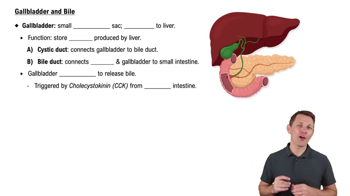
Fats consumed in a meal are not digested in the stomach but emulsified in the duodenum by bile salts produced by the liver. This emulsification breaks large fat droplets into smaller ones, increasing the surface area for pancreatic lipase to effectively digest fats.
Video consigliato:
6:54
Gallbladder and Bile
Pratica correlata