Ch. 24 Nutrition, Metabolism, and Energy Balance
Marieb - Human Anatomy & Physiology 11th Edition
Marieb, Hoehn11th EditionHuman Anatomy & PhysiologyISBN: 9780136874034Non è quello che usi tu?Cambia libro di testo
Capitolo 24, Problema 17

What is the harmful result when excessive amounts of fats are burned for energy? Name two conditions that might lead to this result.

Guida verificata passo dopo passo
1
Understand the concept of fat metabolism: When the body burns excessive amounts of fats for energy, it produces ketone bodies as a byproduct. Ketone bodies are acidic compounds that can accumulate in the blood, leading to a condition called ketoacidosis.
Explain ketoacidosis: Ketoacidosis occurs when the blood becomes too acidic due to the buildup of ketone bodies. This can disrupt normal cellular functions and lead to harmful effects such as dehydration, electrolyte imbalances, and impaired organ function.
Identify the first condition: One condition that can lead to excessive fat metabolism and ketoacidosis is uncontrolled diabetes mellitus, particularly Type 1 diabetes. In this case, the lack of insulin prevents glucose from entering cells, forcing the body to rely on fat as its primary energy source.
Identify the second condition: Another condition that might lead to excessive fat metabolism is prolonged starvation or fasting. When the body runs out of carbohydrate stores, it begins to break down fats for energy, which can result in the production of ketone bodies.
Summarize the harmful result: Excessive fat metabolism leading to ketoacidosis can cause symptoms such as nausea, vomiting, abdominal pain, confusion, and in severe cases, coma or death. It is important to address the underlying conditions to prevent this harmful result.

Risposta video verificata per un problema simile:

Questa soluzione video è stata consigliata dai nostri tutor come utile per risolvere questo problema.
Durata del video:
1m

Concetti chiave

Ecco i concetti essenziali che devi comprendere per rispondere correttamente alla domanda.

Ketosis

Ketosis is a metabolic state that occurs when the body burns fat for energy instead of carbohydrates. This process leads to the production of ketones, which can be used as an alternative energy source. While ketosis can be beneficial in certain contexts, excessive fat burning can lead to an accumulation of ketones, resulting in a condition known as ketoacidosis, particularly in individuals with diabetes.

Ketoacidosis

Ketoacidosis is a serious condition characterized by high levels of ketones in the blood, leading to a decrease in blood pH. This can occur when the body is unable to regulate ketone production, often due to uncontrolled diabetes or prolonged fasting. Symptoms include nausea, vomiting, abdominal pain, and confusion, and it requires immediate medical attention to prevent severe complications.

Fatty Liver Disease

Fatty liver disease is a condition where excess fat builds up in the liver, which can occur when the body metabolizes large amounts of fat for energy. This can lead to inflammation and liver damage over time. Conditions such as obesity and excessive alcohol consumption can contribute to the development of fatty liver disease, highlighting the importance of balanced energy metabolism.
Video consigliato:
Percorso guidato
11:34
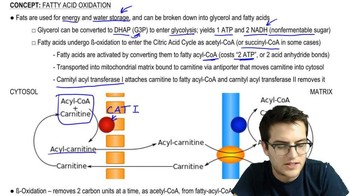
Fatty Acid Oxidation 1