Ch. 25 The Urinary System
Marieb - Human Anatomy & Physiology 11th Edition
Marieb, Hoehn11th EditionHuman Anatomy & PhysiologyISBN: 9780136874034Non è quello che usi tu?Cambia libro di testo
Capitolo 25, Problema 7

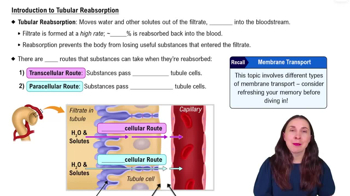
Tubular reabsorption
a. Of glucose and many other substances is a Tm - limited active transport process
b. Of chloride is always linked to the passive transport of Na⁺
c. Is the movement of substances from the blood into the nephron
d. Of sodium occurs only in the proximal tubule

Guida verificata passo dopo passo
1
Step 1: Understand the concept of tubular reabsorption. Tubular reabsorption is the process by which substances are moved from the filtrate in the nephron back into the blood, primarily occurring in the proximal tubule but also in other parts of the nephron.
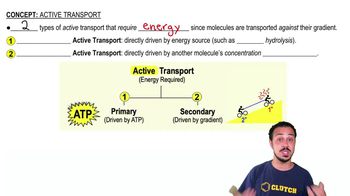
Step 2: Analyze option (a): Tubular reabsorption of glucose and many other substances is a T\_m-limited active transport process. This means there is a maximum transport rate (T\_m) due to the saturation of carrier proteins involved in active transport.
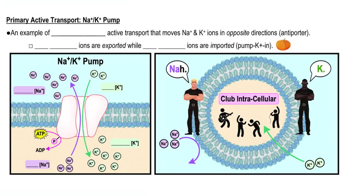
Step 3: Analyze option (b): Reabsorption of chloride ions (Cl⁻) is often linked to the passive transport of sodium ions (Na⁺) because sodium reabsorption creates an electrochemical gradient that facilitates chloride movement, often passively following sodium.
Step 4: Analyze option (c): Tubular reabsorption is the movement of substances from the nephron filtrate back into the blood, not from the blood into the nephron. Movement from blood into the nephron is secretion, the opposite process.
Step 5: Analyze option (d): Sodium reabsorption occurs not only in the proximal tubule but also in other parts of the nephron such as the loop of Henle, distal tubule, and collecting duct, though the majority occurs in the proximal tubule.

Risposta video verificata per un problema simile:

Questa soluzione video è stata consigliata dai nostri tutor come utile per risolvere questo problema.
Durata del video:
3m

Concetti chiave

Ecco i concetti essenziali che devi comprendere per rispondere correttamente alla domanda.

Tubular Reabsorption

Tubular reabsorption is the process by which substances are moved from the filtrate in the nephron back into the blood. It primarily occurs in the proximal tubule but also in other parts of the nephron. This process is essential for reclaiming valuable solutes like glucose, sodium, and water to maintain body fluid balance.
Video consigliato:
4:06
Introduction to Tubular Reabsorption

Transport Maximum (Tm) and Active Transport

Transport maximum (Tm) refers to the maximum rate at which a substance can be reabsorbed due to limited carrier proteins. Active transport requires energy to move substances against their concentration gradient, such as glucose reabsorption in the proximal tubule, which is Tm-limited and saturable.
Video consigliato:
Percorso guidato
02:37
Active Transport

Coupled Transport of Ions (Na⁺ and Cl⁻)

The reabsorption of chloride ions often occurs passively and is linked to the active transport of sodium ions. Sodium reabsorption creates an electrochemical gradient that drives chloride movement, maintaining electroneutrality and facilitating efficient salt and water reabsorption.
Video consigliato:
Percorso guidato
06:57
Primary Active Transport: Na+/K+ Pump