Domanda del libro di testo
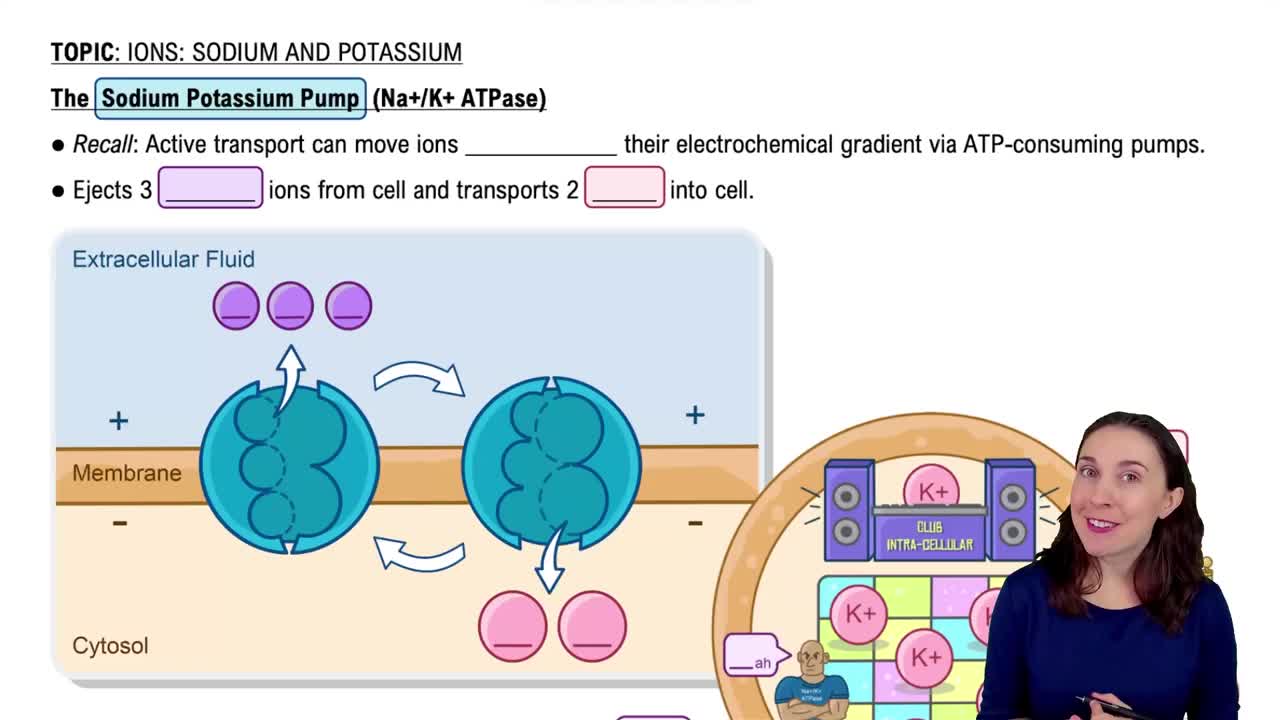
Potassium, magnesium, and phosphate ions are the predominant electrolytes in:
a. Plasma
b. Interstitial fluid
c. Intracellular fluid
620
views

 Marieb, Hoehn 11th EditionCh. 26 Fluid, Electrolyte, and Acid-Base BalanceProblema 3
 Guida verificata passo dopo passo

 01:59
01:59
 03:40 03:40
Potassium, magnesium, and phosphate ions are the predominant electrolytes in:
a. Plasma
b. Interstitial fluid
c. Intracellular fluid
Two substances regulated by parathyroid hormone are:
a. Ammonium ions
b. Bicarbonate
c. Calcium
d. Chloride
e. Hydrogen ions
f. Magnesium
g. Phosphate
h. Potassium
i. Sodium
j. Water
Two main substances regulated by the influence of aldosterone on the kidney tubules are:
a. Ammonium ions
b. Bicarbonate
c. Calcium
d. Chloride
e. Hydrogen ions
f. Magnesium
g. Phosphate
h. Potassium
i. Sodium
j. Water
Body water content is greatest in:
a. Infants
b. Young adults
c. Elderly adults
Water balance is regulated by control of amount(s):
a. Ingested
b. Excreted in urine
c. Lost in perspiration
d. Lost in feces