Ch. 27 The Reproductive System
Marieb - Human Anatomy & Physiology 11th Edition
Marieb, Hoehn11th EditionHuman Anatomy & PhysiologyISBN: 9780136874034Non è quello che usi tu?Cambia libro di testo
Capitolo 27, Problema 15

Describe the major structural (and functional) regions of a sperm.

Guida verificata passo dopo passo
1
The sperm cell is divided into three major structural regions: the head, the midpiece, and the tail. Each region has distinct functions essential for fertilization.
The head contains the nucleus, which houses the genetic material (DNA) necessary for fertilization. It is covered by the acrosome, a specialized structure that contains enzymes to help penetrate the egg's protective layers during fertilization.
The midpiece is packed with mitochondria, which generate ATP (adenosine triphosphate) to provide the energy required for the sperm's movement. This region connects the head to the tail.
The tail, also known as the flagellum, is responsible for the sperm's motility. It uses whip-like movements to propel the sperm forward toward the egg.
Together, these regions work in coordination to ensure the sperm can travel through the female reproductive tract, reach the egg, and successfully fertilize it.

Risposta video verificata per un problema simile:

Questa soluzione video è stata consigliata dai nostri tutor come utile per risolvere questo problema.
Durata del video:
2m

Concetti chiave

Ecco i concetti essenziali che devi comprendere per rispondere correttamente alla domanda.

Sperm Structure

Sperm cells have a unique structure that includes three main parts: the head, midpiece, and tail (flagellum). The head contains the nucleus with genetic material and is capped by the acrosome, which helps penetrate the egg. The midpiece is packed with mitochondria that provide energy for movement, while the tail propels the sperm forward.
Video consigliato:
4:16
Structure of the Eyeball Example 1

Acrosome Function

The acrosome is a specialized structure located at the tip of the sperm's head. It contains enzymes that are crucial for fertilization, as they help digest the protective layers surrounding the egg, allowing the sperm to penetrate and fertilize it. This enzymatic action is essential for successful reproduction.
Video consigliato:
Percorso guidato
06:04
Functional Groups

Flagellar Movement

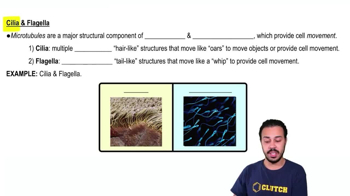
The tail, or flagellum, is responsible for the motility of the sperm. It moves in a whip-like manner, allowing the sperm to swim through the female reproductive tract to reach the egg. The energy generated by the mitochondria in the midpiece is vital for sustaining this movement, making it a key factor in fertility.
Video consigliato:
Percorso guidato
03:14
Cilia & Flagella