Ch. 1 The Human Body: An Orientation
Marieb - Human Anatomy & Physiology 7th Edition
Marieb, Hoehn7th EditionHuman Anatomy & PhysiologyISBN: 9780805359091Non è quello che usi tu?Cambia libro di testo
Capitolo 1, Problema 15

Assume that the body has been sectioned along three planes: (1) a median plane, (2) a frontal plane, and (3) a transverse plane made at the level of each of the organs listed below. Which organs would be visible in only one or two of these three cases?
a. Urinary bladder
b. Brain
c. Lungs
d. Kidneys
e. Small intestine
f. Heart

Guida verificata passo dopo passo
1
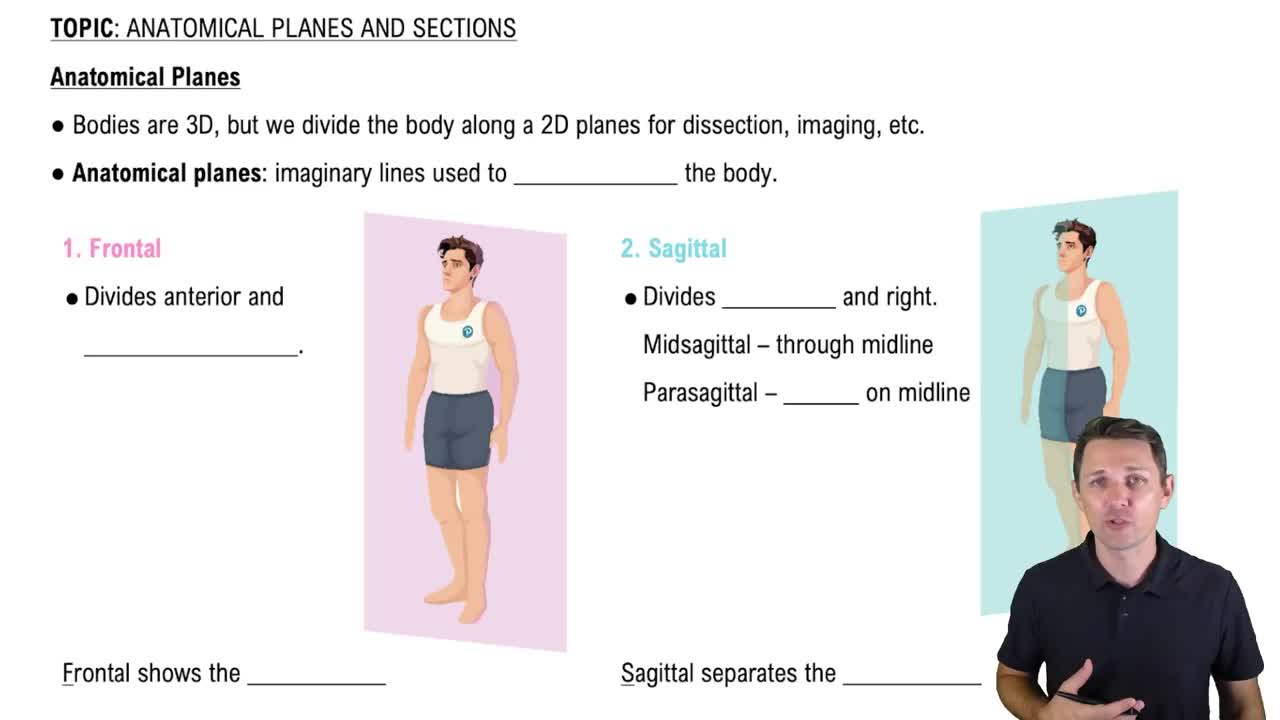
Step 1: Understand the three planes of sectioning: (1) Median plane divides the body into left and right halves, (2) Frontal plane divides the body into front (anterior) and back (posterior) parts, and (3) Transverse plane divides the body into upper (superior) and lower (inferior) parts at the level of the organ.
Step 2: For each organ, visualize or recall its anatomical position and symmetry relative to these planes. Determine if the organ lies on the midline (median plane), is paired or single, and whether it extends across the frontal and transverse planes.
Step 3: Analyze the urinary bladder, which is a single midline organ located in the pelvic cavity. It will be visible in the median plane and transverse plane but may not be fully visible in the frontal plane depending on the exact section.
Step 4: Consider the brain, which is a single organ but has symmetrical left and right hemispheres. It will be visible in all three planes because it spans midline and extends front to back and top to bottom.
Step 5: For paired organs like lungs and kidneys, they will appear in the frontal and transverse planes but may not be fully visible in the median plane since it divides the body into left and right halves and may cut through only one side. The heart and small intestine, being midline or centrally located organs, will be visible in multiple planes but their visibility depends on their anatomical spread.

Risposta video verificata per un problema simile:

Questa soluzione video è stata consigliata dai nostri tutor come utile per risolvere questo problema.
Durata del video:
1m

Concetti chiave

Ecco i concetti essenziali che devi comprendere per rispondere correttamente alla domanda.

Anatomical Planes of the Body

The body is divided by three main anatomical planes: the median (sagittal) plane divides the body into left and right halves; the frontal (coronal) plane divides it into front (anterior) and back (posterior) parts; the transverse (horizontal) plane divides it into upper (superior) and lower (inferior) sections. Understanding these planes helps determine which organs appear in each section.
Video consigliato:
04:01
Anatomical Planes

Organ Position and Symmetry

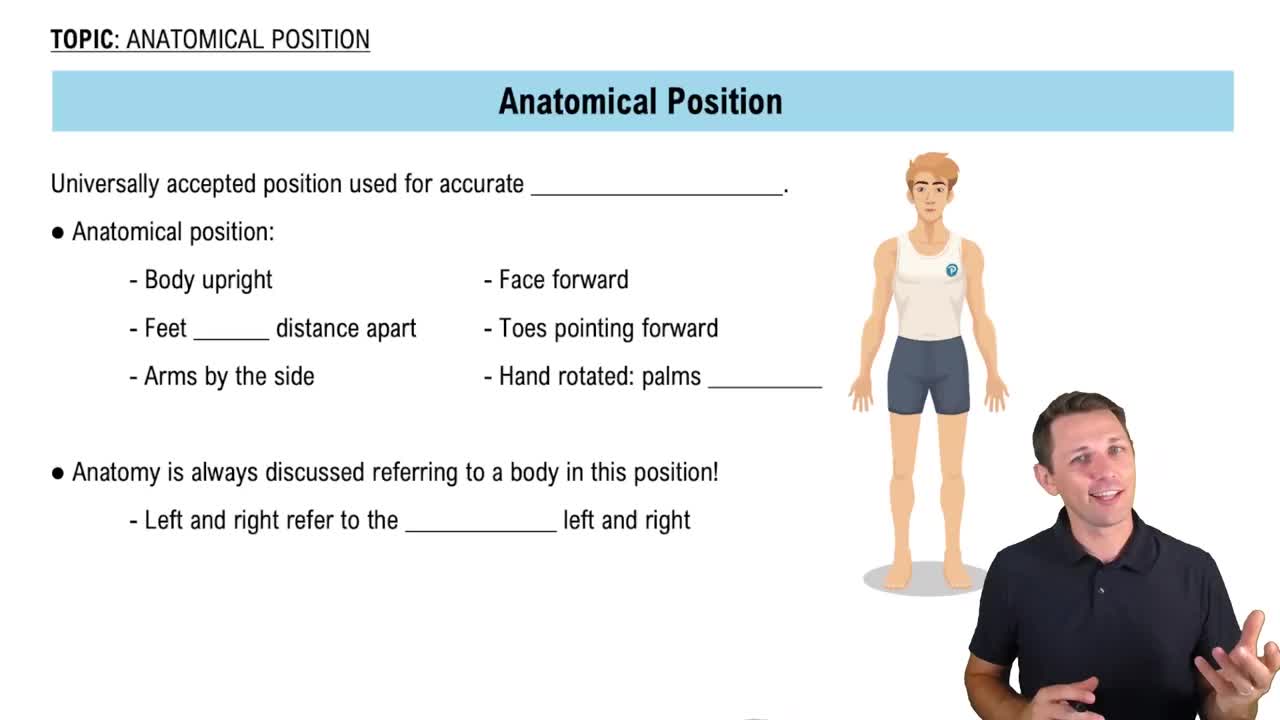
Organs vary in their location and symmetry within the body. Some, like the brain and heart, are centrally located or paired, while others, like the urinary bladder or small intestine, are midline or more diffuse. Knowing an organ’s position relative to the planes helps predict its visibility in different sectional views.
Video consigliato:
02:40
Anatomical Position

Cross-Sectional Anatomy and Organ Visibility

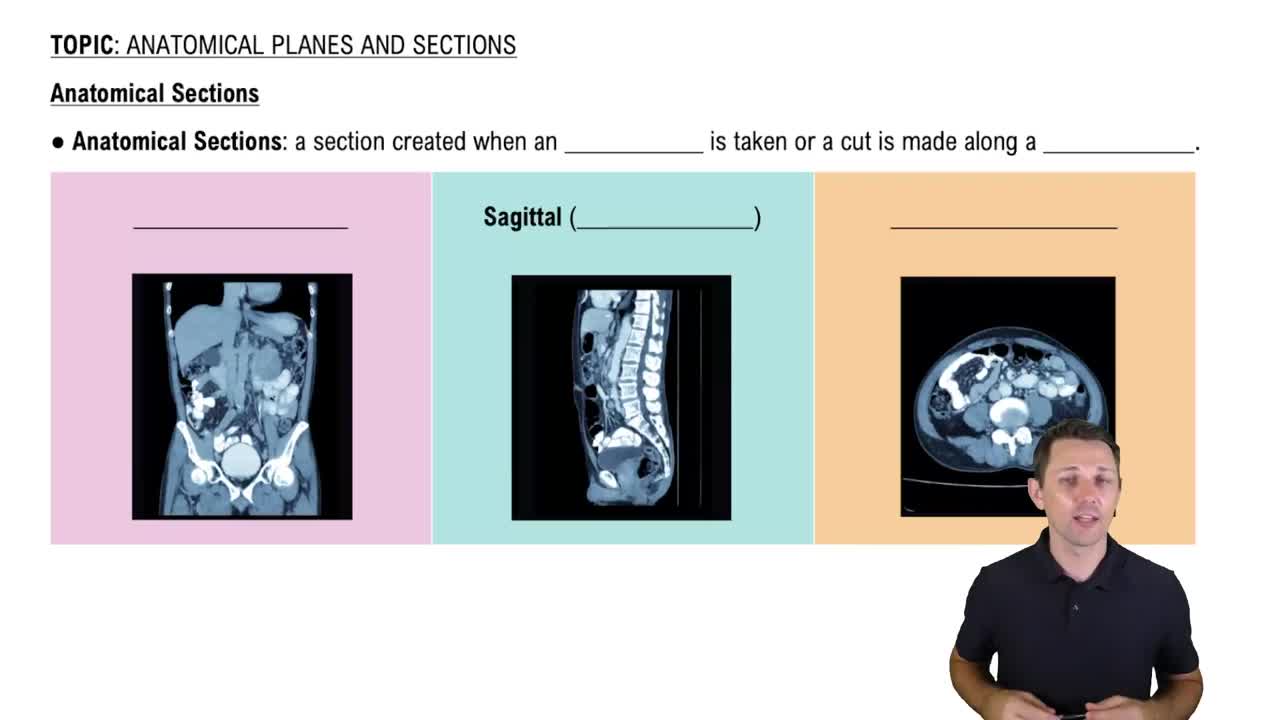
Cross-sectional anatomy studies how organs appear when the body is sliced along different planes. Depending on the plane and organ location, some organs may appear in one, two, or all three sections. For example, paired organs like kidneys may appear in two sections, while midline organs like the bladder may appear in only one.
Video consigliato:
02:33
Anatomical Sections